FIBER OPTIC COLLIMATORS

Fiber collimator is an effective passive optical component used for laser beam collimating. and Fiber optic collimators come in many forms.

Fiber collimator is an effective passive optical component used for laser beam collimating. and Fiber optic collimators come in many forms.

There are more things to consider  when it comes to purchasing collimators .

  • LENS TYPE
  • SIZE DOES MATTER
  • SPHERICAL OR CHROMATIC ABERRATION
  • SINGLEMODE OR MULTIMODE
  • PAIRING, TARGETING, OR LASER PIGTAILING
  • 0 DEGREE OR 8 DEGREE
  • ALTERNATIVES


Introduction to Fiber Collimator

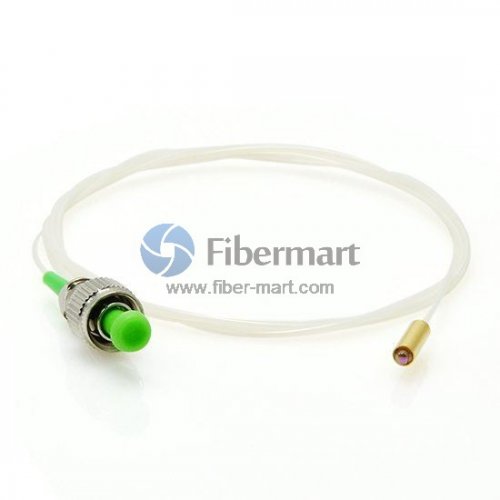
Fiber Optic Collimators are devices used to expand and collimate the output light at the fiber end, or to couple light beams between two fibers. They are a module that combine a fiber and a lens, and has a function that produces parallel beams. We offer a range of fixed and adjustable fiber optic collimation packages for collimating a laser beam from the end of an FC/APC, FC/PC, or SMA connectorized fiber while maintaining diffraction-limited performance at the design wavelength.  They are available with different wavelengths (850 nm, 980 nm, 1060 nm, 1310 nm, 1550 nm) or fiber options (SM fiber, MM fiber, PM fiber, and LMA fiber, etc).

A fiber collimator is a device that narrows a beam of particles or waves. It can either cause the directions of light to become more aligned in a specific direction, or cause the spatial cross section of the beam to become smaller. Usually, fiber collimator is required to naturally transform diverging lights from an optical fiber to a parallel beam of light. It consists a single-mode or multimode fiber pigtail and a collimating lens. Collimator can also be used to calibrate other optical devices to check if all elements are aligned on the optical axis.

6e771d4efc41234527a8c1675ff5c3b3.image.500x500.jpg

Characteristics

  • Low Insertion Loss and Return Loss
  • Low Back Reflection
  • High Extinction Ratio
  • Low Insertion Loss
  • Wide Operating Wavelength and Temperature
  • Scientific design with serious processing art


Applications

  • Optical cable jumper or pigtail cable
  • Laser Beam Collimating
  • Optical cable jumper or pigtail cable
  • PM Isolator and PW WDM
  • Laser Beam Collimating


How Does It Work?

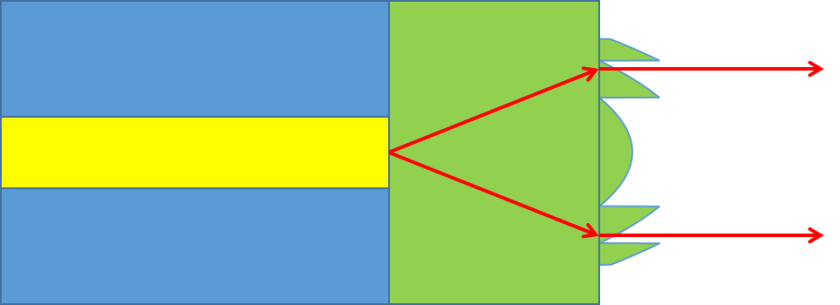
When placing the fiber end on the collimator lens, the light will be aligned to a parallel direction. Then through a slight adjustment of fiber end position, the working distance is obtained. The working distance of fiber collimator is related to the distance between fiber end and lens. According to the actual demands, we can determine the parameters of fiber collimator, such as distance between fiber end and lens, beam radius, accuracy, to achieve better performance.

diffractive-collimator-layout.png

Conclusion

Selecting the right type of fiber collimator is essential to the performance of network, you should consider your project requirements as important factors. Fiber-MART offer a range of fixed and adjustable fiber optic collimation packages for collimating a laser beam from the end of an FC/APC, FC/PC, or SMA connectorized fiber while maintaining diffraction-limited performance at the design wavelength. For more information, welcome to visit www.fiber-mart.com or contact me by E-mail: service@fiber-mart.com 

Direct Attach Cable(DAC) VS Active Optical Cables(AOC)

As one kind of optical transceiver assembly, Active Optical Cables (AOC) and Direct Attach Cables (DAC) are a alteration of optical transceiver, they are used to connect switches with one another when creating a stack or switches to routers or servers.

As one kind of optical transceiver assembly, Active Optical Cables (AOC) and Direct Attach Cables (DAC) are a alteration of optical transceiver, they are used to connect switches with one another when creating a stack or switches to routers or servers.

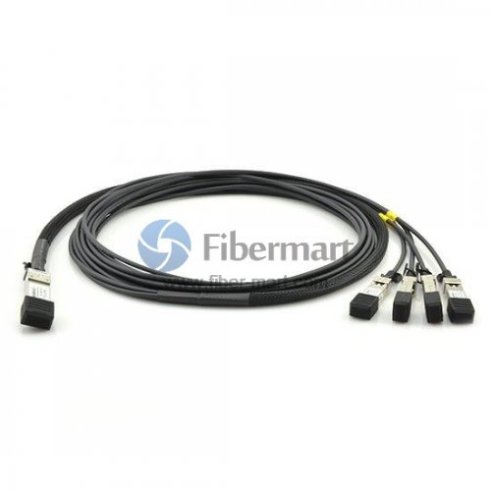
A Direct Attach Cable (DAC) can be produced as passive or active. As the passive DAC has no active components, it offers a direct electrical connection between corresponding cable ends. This method can also be completed by an active DAC, which is considered active because there are extra electronics embedded inside the connectors. Therefore it helps to advance signal quality, offering a longer cable distance. The DAC is a fixed assembly that can be bought in several lengths for short distances of up to 15 Meter.They are suitable for short distances, making them ideal for highly cost-effective networking connectivity within a rack and between adjacent racks.

AOC cable is always active. It has two types of connectors combined with fixed optical fibers with a similar function as optical transceivers. In respond to the demand for a higher data bandwidth, active optical cable (AOC cable) has came into being to satisfy different cloud computing applications. Active optical cable is a term used to describe a cable that mates with standard electrical interfaces. The electrical-to-optical conversion on the cable ends is adopted to enhance the transmission speed and distance of the cable without sacrificing compatibility of standard electrical interfaces.

Both DAC and AOC have their particular advantage and disadvantage.

Growth of fiber technology, someone may believe that copper technology is obsolete. This is not accurate for direct attach copper cables. Indeed, a direct attach copper cable still has its advantages:

With the growth of copper cable technology, in Today’s market,DAC can support higher data rates than old copper interfaces—from 4Gbps to 100Gbps per channel.  reduce the overall power consumption and heat dissipation, which help network operators save cost.DAC cables are similar and hot swappable just like fiber optic modules. Supporting such multiple protocols from Gigabit to 100G Ethernet,Direct Attach Cables (DAC) are a cost effective solution compared to optical transceivers.

DAC cables have the potential to Another factor is that DAC cable is robust and does not need patch panels or additional cables when connected to devices, as is the case with an optical module. The modules on both ends make them sturdy and reliable as well as space-saving.

dac

Though there are a few disadvantages of using direct attach cables: One of it is that direct attach (DAC) copper cables are more thick and massive than AOC cables, making it difficult to be managed. Additionally, since the electrical signals are used, direct attach copper cables are susceptible to the effects of electromagnetic interference (EMI), such as unwanted responses, degradation, or complete system failure.

AOC provides more advantages, such as lighter weight, high performance, low power consumption, low interconnection loss, EMI immunity and flexibility.

AOC

AOCs are a substitute to optical transceivers which exclude the detachable interface between transceiver modules and optical cables. It offers a number of advantages over direct attach copper (DAC) cables. due to its material, AOC weighs less than a DAC cable. optical fiber uses light signals, AOC is immune to electromagnetic interference. the disadvantage of AOC is that it may be a slight more expensive for customers.

Whatever believe it or not, Nothing can be perfect, so do the DAC cables. Although they can save space and cost for data center managers, the drawbacks still exist. As the main element of DAC cable is copper, it is heavy and bulky. the more important, if DAC cables are deployed in high volume, the cable diameter and cable stiffness are another problem that should be considered. In this case, active optical cables (AOC cables) seem to be a better choice, for they are made of thinner and more pliable optical cable.

Fiber-Mart supplies various kinds of high speed interconnect DAC & AOC cable assemblies including 10G SFP+ Cables, 40G QSFP+ Cables, and 120G CXP AOC Cables. All of our cables can meet the ever growing need to cost-effectively deliver more bandwidth, and can be customized to meet different requirements. For more information,pls visit www.fibermart.com. if you have any requirements , pls not hesitate to contact with us service@fiber-mart.com


Comparing 40G &100G Transceivers modules

As things stand, the trend for high-speed data transmission and high-bandwidth is overwhelming.

As things stand, the trend for high-speed data transmission and high-bandwidth is overwhelming.

now, whether you believe it or not, prepared or not prepared, 40G and 100G have already on the way. To upgrade to 40G or skip it and directly migrate to 100G has become a question for many data center mangers and IT engineers

The growth in 100G comes at the expense of 10G and 40G interfaces. Infonetics says that 10G in carrier networks “is beginning a long decline after an epic 15-year run.”Meanwhile, the market for 40G is “vaporizing,” according to the market research firms.“40G transceivers are ramping up hard as data centers deploy 40GbE, particularly as a high-density 10G interface via breakout cables. 40G QSFP demand growth over single-mode fiber is primarily a result of large shipments to Internet content providers Microsoft and Google,” said Andrew Schmitt, research director for carrier transport networking at IHS Infonetics.

40G and 100G Transceiver Technical Features

40G and 100G have two main types in the data center. Short reach (SR4) for ~100 meters transmission on multimode fiber and Long Reach (LR4) for 100 meters to 10km using single-mode fiber. We can use SR/LR transceivers to connect compute clusters and various switches layers in data centers. 40G transceivers are typically deployed as four 10G lanes in QSFP or CFP MSAs. 40G SR transceiver uses 8 multi-mode fibers, VCSEL lasers, and the QSFP MSA. Using edge-emitting lasers and multiplexes the four 10G lanes onto two single-mode fibers, 40G LR4 reach a 10km distance per CFP MSA, CFP/2 or QSFP28 MSAs. The 40G SR4 and LR4 transceivers can be used in the same QSFP switch port without any issues.

40G,In today’s market, 40G products mainly include 40GBASE-SR4 and 40GBASE-LR4 QSFP+ modules and 40G AOCs. QSFP+ supports both 40G links between racks and high-density 10G links within the rack, especially the 40G QSFP+ breakout AOC which is an ideal solution for 40G migration.“40G transceivers are ramping up hard as data centers deploy 40GbE, particularly as a high-density 10G interface via breakout cables. 40G QSFP demand growth over single-mode fiber is primarily a result of large shipments to internet content providers Microsoft and Google,”said Andrew Schmitt.

40

100G SR10 transceivers use 20 multi-mode fibers, VCSELs and the CXP MSA, the 100G LR4 transceivers uses CFP form and 2 single-mode fibers.The market for 100G data center optics is accelerating, but it has yet to be turbocharged by widespread data center deployment in the way 40G QSFP optics have.

The market for 100G data center optics is accelerating, but it has yet to be turbocharged by widespread data center deployment in the way 40G QSFP optics have.The data center likely will be the engine of any overall growth in optical transceiver sales over the next several years. Data centers now represent 65% of the overall telecom and datacom market for 10G/40G/100G optical transceivers. 100

100G is ready here. Tens of thousands of 100G Ethernet links deployed in core routers and carrier switches. Vast majority are CFP modules and CFP2 deployments are now starting. In addition,100G is rapidly expanding. For instance, new optical standards for the data center (100G SR4, CWDM4, PSM4) and new higher density 100G module form factors like CFP4 and QSFP28 are on the way. High port-count 100G switches are being designed and many 100G modules will be used to support high-density 10G and 25G. It is said that 100G and 4x 25G deployments are expected to grow substantially starting in 2015. 100G products mainly include 100GBASE-SR10 and 100G LR4 CFP/CFP2/CFP4 and 120G AOCs. Additionally, QSFP28 as the 100G module form factor of choice for new data center switches is also launched.

If you ask me why 40G Ethernet will be obsolete? The short answer is “cost”. From the technical point, The primary issue lies in the fact that 40G Ethernet uses 4x10G signalling lanes. On UTP, 40G uses 4 pairs at 10G each. Early versions of the 40G standard used 4 pairs, but rapid advances in manufacturing developed a 4x10G WDM on a single fiber optic pair. Each 40G SFP module contains a silicon chip that performs multiplexing so that the switch see 40 gigabits in and 40 gigabits out. It’s similar to Coarse Wave Division Multiplexing when using fiber. When you buy a 40G cable or QSFP, you are paying for the cost of the chip and software, plus the lasers, etc. When using 25/50/100G, the “lane speed” is increased to 25 gigabits per second. For 100G Ethernet, there are four 25G signalling lanes. It’s cheaper to buy 100G with four lanes rather than 40G with a four-lane MUX.

40G/100G transceivers development supports this growth with smaller module form factors for higher port density, lower power consumption per bit and lower cost per bit.

Fiber-MART offers several 40G and 100G Transceiver modules to support the transmission of very high-speed digital signals, providing a bandwidth of 40G or 100G, with distances reaching up to 40 kilometers. These include 40G CFP transceiver and 100G CFP transceivers as well as 40G QSFP+ transceivers. For more informations, you can visit www.fiber-mart.com.pls feel free to contact us for any question. E-mail : service@fiber-mart.com

Understanding CWDM DWDM MUX/DEMUX

In the communications market,  Wavelength Division Multiplexing (WDM) is a technology which multiplexes a number of optical carrier signals onto a single optical fiber by using different wavelengths (i.e., colors) of laser light.

In the communications market,  Wavelength Division Multiplexing (WDM) is a technology which multiplexes a number of optical carrier signals onto a single optical fiber by using different wavelengths (i.e., colors) of laser light. This technique enables bidirectional communications over one strand of fiber, as well as multiplication of capacity.

The WDM is divided into three types (WDM, CWDM and DWDM) on the basis of wavelength difference among the three.

CWDM Mux/Demux

Dense Wavelength Division Multiplexing (CWDM) networks need multiplexer/demultiplexer (MUX/DEMUX) modules to combine and split wavelength channels at standard ITU grid. These modules are generally called CWDM MUX/DEMUX.

The CWDM Mux/Demux is a universal device capable of combining nine optical signals into a fiber pair. It is designed to support a broad range of architectures, ranging from scalable point-to-point links to two fiber-protected rings. The market-standard LGX™ packaging of the CWDM Mux/Demux enables easy deployment in existing LGX-compatible frames or WaveReady 3500F shelves.

The CWDM Mux/Demux is designed to interoperate with both the WaveReady line of transponder and optical regenerator solutions as well as CWDM transponders and small form-factor pluggables (SFPs) used in widely available transmission equipment. With billions of field operating hours, the industry leading Lumentum optical multiplexing technology offers unparalleled reliability and leading-edge performance.

CWDM Mux/Demux is a flexible network solution for WDM optical networks. At most 18 full-duplex wavelengths can be added over a single fiber trunk which greatly alleviates fiber exhaustion. With low insertion loss and high stability, CWDM Mux/Demux is applied to many operations, such as CATV links, WDM systems, test and measurement, metro and access networks, FTTH networks, etc. The deployment of CWDM Mux/Demux is transparent and clear. Its compact form factor enables a much easier manipulation. Only coarse wavelengths can be transmitted over the fiber which reduces the WDM system cost.

Three kinds of CWDM Mux/Demux are widely used in the application. They are 1RU 19″ rack chassis CWDM Mux/Demux, half 19″/1RU CWDM Mux/Demux and splice/pigtailed CWDM Mux/Demux. CWDM Mux/Demux in 19 inch rack mount package is often used for CWDM, EPON and CATV network. Half 19″/1RU CWDM Mux/Demux is packed in LGX box using thing film coating and non-flux metal bonding micro optics packaging. Splice/pigtailed CWDM Mux/Demux is packed in the ABS box package based on standard thin film filter (TFF) technology.

DWDM Mux/Demux

Dense Wavelength Division Multiplexing (DWDM) networks need multiplexer/demultiplexer (MUX/DEMUX) modules to combine and split wavelength channels at standard ITU grid. These modules are generally called DWDM MUX/DEMUX.

DWDM Mux/Demux conveys optical signals in a more dense wavelength. It is especially used for long distance transmission where wavelengths are highly-packed together. The maximum delivered wavelengths can reach up to 48 channels in 100GHz grid (0.8nm) and 96 channels in 50GHz grid (0.4nm). DWDM Mux/Demux uses a reliable passive WDM technology that achieves low insertion loss. And it provides a solution for adding WDM technology to any existing network device. Applications like point-to-point DWDM fiber optimization, linear add/drop DWDM fiber optimization, external optical monitoring are typically using DWDM Mux/Demux module.

The functionality of DWDM (Dense Wavelength Division Multiplexing) resembles to the one of CWDM. The DWDM channel spacing is 0.8/0.4 nm (100 GHz/50 GHz grid). This small channel spacing allows to transmit simultaneously more information. Currently a restriction on wavelengths between 1530 nm and 1625 nm exists which corresponds to the C and L band. DWDM wavelengths are more expensive compared to CWDM caused by the need of more sophisticated transceivers.

Likewise, 1RU 19″ rack chassis DWDM Mux/Demux, Half 19″/1RU DWDM Mux/Demux and splice/pigtailed DWDM Mux/Demux are three divisions of DWDM Mux/Demux modules. The first type is in 19 inch rack mount package used for long-haul transmission over C-band range of wavelengths. The second one is in LGX package used for PDH, SDH/SONET, Ethernet services transmission. The last one is in ABS box package and its pigtails are labeled with wavelengths.

Comparison Between CWDM and DWDM System

The difference between CWDM and DWDM lies in the channel spacing between neighbored wavelengths, for CWDM 20 nm and for DWDM 0.8/0.4 nm (using 100 GHz/50 GHz grid). this advantage for an efficient CWDM/DWDMintegration. Thereby up to sixteen DWDM channels are transmitted simultaneously in only one CWDM channel (1530 nm and 1550 nm). Thus an easy-to-realize channel extension can be achieved under continued use of existing CWDM components.

Price differenceCWDM system carries less data, but the cabling used to run is less expensive and less complex. A DWDM system has much denser cabling and can carry a significantly larger amount of data, but it can be cost prohibitive, especially where there is a need for a large amount of cabling in an application.

Transmission distanceDWDM system is designed for longer distance transmission as stated above. They can transmit more data over a significantly larger run of cable with less interference than a comparable CWDM system. If there is a need for transmitting the data over a long range, DWDM system will likely be the best in terms of functionality of the data transmittal and the lessened interference over the longer distances that the wavelengths must travel.

CWDM system cannot transmit over long distances because the wavelengths are not amplified, and therefore CWDM is limited in its functionality over longer distances. Typically, CWDM can travel anywhere up to about 100 miles (160 km), while an amplified DWDM system can go much further as the signal strength is boosted periodically throughout the run. As a result of the additional cost required to provide signal amplification, the CWDM solution is best for short runs that do not have mission critical data.

To sum up, before buying We should first understand the differences between them,Fiber-Mart provides a series of CWDM DWDM MUX/DEMUX modules with as more as 18 channels (20nm spaced) in simplex or duplex configurations. All the CWDM  DWDM modules are available with three types of packaging: ABS Pigtailed Box, Rack Chassis and LGX Cassette. For more details, please visit www.fiber-mart.com. Please not hesitate to contact us for any question. E-mail: service@fiber-mart.com

Multimode fiber promises to replace expensive single mode fiber

Optical fiber is the backbone of modern communications. Singlemode fiber dominates long distance applications because of its reliability; however,This fiber has an internal diameter of only 10 micrometers (us) and is very expensive.

It is well known that optical fibers can be classified into single-mode fibers and multi-mode fibers depending on the modulus of the transmission point. The core of a singlemode fiber is relatively thin, and the transmission frequency bandwidth, capacity, and transmission distance are long, but because it requires a laser source, higher cost. Multimode fiber such as Multimode attenuator、Multimode copper cable、OM1/OM2 Multimode PVC jack、Multimode indoor cable、Multimode  MPO Cassette etc.

As fiber deployment has become mainstream, Multimode fiber has attracted much attention, currently Russian and Finnish researchers collaborate on a proof-of-concept program to further expand the use of multimode fibers with larger core diameters; researchers use high-power lasers and anisotropic materials and expect to develop optical transmissions Maintain coherence of the fiber. Maintaining the coherence of light is a necessary condition for realizing quantum computers and sensor networks. It also helps multimode fibers to replace expensive singlemode fibers in more remote communications applications.

Optical fiber is the backbone of modern communications. Singlemode fiber dominates long distance applications because of its reliability; however,This fiber has an internal diameter of only 10 micrometers (us) and is very expensive. The lower cost multimode fiber has an inner diameter of 100us, which is currently used for short-distance communication. Generally, it supports distances of 1,000 meters and 1-Gbit/s transmission speed.

www.fibermart.com1

Fig. 1: Lateral distribution of light radiation intensity in the output beam (Data source: MIPT)

Fibers that can maintain coherence are more advantageous than semiconductor sensors because they require little power. The result comes from the inability of distributed sensor systems to function. In addition, these fibers can be used not only in high-power laser systems,  but also as sensors because changes in polarization characteristics result from changes in the environment that they sense accurately.

Protecting optical fibers has advantages over semiconductor sensors because they require little power and can handle,The result of a distributed sensor system. Not only can they be used in high power laser systems, but the use as sensors comes from the observed fact that changes in their polarization properties make it possible to accurately sense the changes caused by environmental factors.

www.fibermart.com11

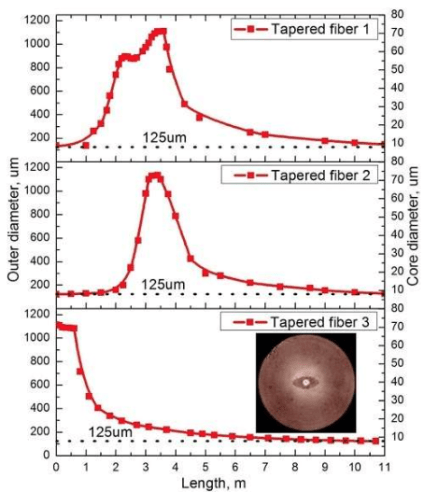
Figure 2: The figure shows the diameter of the outer protective layer along the length of the three tapered fibers (left side) and its core diameter (right side). illustration A cross-section of an anisotropic fiber structure is shown; the fiber is composed of a core, an oval inner protective layer and an outer protective layer. (Data Source: MIPT)
Fiber lasers use optical resonators to reflect light back and forth, thereby causing lasers. At present, this laser is only finished
Using the basic mode (upper left in Figure 1), the power is limited to the 10 nm fiber capacity. Increasing the transmission power of large lasers leads to uncontrolled variations in the refractive index of the fiber, causing parasitic nonlinear effects. The solution adopted by Russian and Finnish researchers was to change the core and the inner protective layer (Figure 2). Russian and Finnish researchers have used this technique to confirm the concept that less than 1% of the energy transmitted through high-power lasers is lost in the 100us fiber. Researchers have completely preserved the polarization properties of optical fibers by creating an internal protective layer for the anisotropic properties of large optical fibers (indicating that they propagate only in the length direction because the internal protective layer is oval).

Fiber-Mart offers a wide range of options for multimode fiber optics, professional design, custom services, and portability. For customized multimode fiber packaging, please feel free to contact us: product@fiber-mart.com.