Setting up Fiber Optics Technology

by http://www.fiber-mart.com

It is widely assumed that fiber optics is a new phenomenon that has recently revolutionized the communication infrastructure. Contrary to common belief, Chicago witnessed the first installation of a fiber optic link as far back as 1976. Since then, fiber optics has become widely used in telecommunications because of its large bandwidth and distance advantages over conventional copper wire.
fiber optic patch cords As fiber optic communication users grow, the need to have a highly reliable system becomes more evident. By paying more attention to the design, installation and operation of a fiber optic system, it is possible to take advantage of the security, bandwidth and distance that fiber optics offers. What are some guidelines you can use to ensure proper installation and usage of your fiber optic system? The first step is to determine the distance or the range of the link that you are working with – longer links require singlemode fibers or lasers, while shorter links take multimode fibers or LED Sources.
Then consider the environment you are working with – is your installation outdoors or above the ceiling , or in an office or factory floor. These factors will help to determine how your fiber will be mounted. If you have a ceiling application, you may want to source fiberglass push and pull rods to help you with those hard to reach places.
greenlee pro wire strippersNow it is important to plan splicing requirements, long lengths of cables may need to be spliced and the right tools go a long way to doing a great job. If you’re cutting into tight-buffered cable your best option is to use Kevlar shears because they cut the cable clean and neat which can save polishing time. Another good investment would be cable strippers and lint free wipes to clean any debris left from the glass fibers. You also want to consider the type of hardware that may come in handy, if splice closures are appropriate; these will have to be sourced beforehand.
Once your fibers have been sheared, polished, cleaned and tested it becomes important to choose a termination type appropriate for your application. Remember to clean all your connectors properly and to label all your cables to identify your fiber optic cable. There are now kits on the market that may carry everything you need, which will save you a bit of time in sourcing different tools necessary for your application. Once you have documented your entire fiber optic network you should be good to go. Remember, documentation is foresight; it will help when it comes time to troubleshoot, upgrade or restore your network.
Fiber Optic Fusion Splicers and How They Work

by http://www.fiber-mart.com

What is a fiber optic fusion splicer?
A fiber optic fusion splicer is a device that uses an electric arc to melt two optical fibers together at their end faces, to form a single long fiber. The resulting joint, or fusion splice, permanently joins the two glass fibers end to end, so that optical light signals can pass from one fiber into the other with very little loss.
How does a fusion splicer work?
Before optical fibers can be successfully fusion-spliced, they need to be carefully stripped of their outer jackets and polymer coating, thoroughly cleaned, and then precisely cleaved to form smooth, perpendicular end faces. Once all of this has been completed, each fiber is placed into a holder in the splicer’s enclosure. From this point on, the fiber optic fusion splicer takes over the rest of the process, which involves 3 steps:
Alignment: Using small, precise motors, the fusion splicer makes minute adjustments to the fibers’ positions until they’re properly aligned, so the finished splice will be as seamless and attenuation-free as possible. During the alignment process, the fiber optic technician is able to view the fiber alignment, thanks to magnification by optical power meter, video camera, or viewing scope.
Impurity Burn-Off: Since the slightest trace of dust or other impurities can wreak havoc on a splice’s ability to transmit optical signals, you can never be too clean when it comes to fusion splicing. Even though fibers are hand-cleaned before being inserted into the splicing device, many fusion splicers incorporate an extra precautionary cleaning step into the process: prior to fusing, they generate a small spark between the fiber ends to burn off any remaining dust or moisture.
Fusion: After fibers have been properly positioned and any remaining moisture and dust have been burned off, it’s time to fuse the fibers ends together to form a permanent splice. The splicer emits a second, larger spark that melts the optical fiber end faces without causing the fibers’ cladding and molten glass core to run together (keeping the cladding and core separate is vital for a good splice – it minimizes optical loss). The melted fiber tips are then joined together, forming the final fusion splice. Estimated splice-loss tests are then performed, with most fiber fusion splices showing a typical optical loss of 0.1 dB or less.

1.25mm OD Singlemode Ceramic Ferrule for LC Fiber Connector 1.0um Online Sale

Specification:

Outer diameter: (1.2499±0.0005)mm
Inner diameter: (0.125+0.001/-0)mm
Concentricity: 1.0μm
Insertion loss:≤0.2dB
return loss:≥60dB
length:(6.50±0.05)mm

Features:

Good compatibility
Accurate mechanical dimensions
Good reliability and stability
Compliant with RoHS, Bellcore, IEC

product link: https://www.fiber-mart.com/125mm-od-singlemode-ceramic-ferrule-for-lc-fiber-connector-10um-online-sale-p-16522.html


Application:

Telecommunication
CATV
LAN (including FTTx)
Data network


1.25Gbps 1550nmTX/1490nmRX BiDi GBIC 80km Transceiver

BGBIC-1G54-80

The BIDI GBIC series optical transceivers meet the Gigabit Interface Converter (GBIC) specification Rev.5.5. It satisfies the optical interface specifications defined in IEEE 802.3z Drift 5.0 for Gigabit Ethernet. This module is designed for singlemode fiber and operates at a nominal wavelength of 1490nm/1550nm. The transmitter section uses a multiple quantum well FP laser and is a class 1 laser compliant according to International Safety Standard IEC-60825. The receiver section uses an integrated InGaAs detector preamplifier (IDP) mounted in an optical header and a limiting post-amplifier IC. A PECL input /output logic interface is used. TTL RX-LOS output simplifies interface to external circuitry. A 20-pin SCA-2 host connector is used to connect the converter to the host system.

Key Features

    • Support 1.25Gbps data links
    • A type: 1490nm FPTx/1550nmRx
    • B type: 1550nm FPTx/1490nmRx
    • Average Output Power:-5~0dBm
    • Receiver Sensitivity:-23dBm
    • 80km with 9/125um SMF
    • 3.3/5V Power supply and TTL Logic Interface
    • Hot-Pluggable SFP Footprint Simplex SC Connector Interface
    • Class 1 FDA and IEC60825-1 laser safety compliant
    • Compliant with GBIC Specification Rev.5.5
    • Compliant with IEEE 802.3z Gigabit Ethernet 1000BASE-SX
    • Compliant with Fiber Channel FC-PH-2 for 100-M5-SN-1 and 100-M6-SN-1


Applications

    • Gigabit Ethernet Switches and Routers
    • Fiber Channel Switch Infrastructure
    • Other optical link


Ordering Information

Part No. Data Rate (Gbps) Wavelength (nm) TX Power (dBm) Re Sens. (dBm) Transmission Distance Fiber Type Connector Type Temp. Range
BGBIC-1G35-2 ≤ 1.25 1310~1550 -9~-3 <-21 2km MMF SC 0~70°C
BGBIC-1G53-2 ≤ 1.25 1550~1310 -9~-3 <-21 2km MMF SC 0~70°C
BGBIC-1G35-10 ≤ 1.25 1310~1550 -9~-3 <-21 10km SMF SC 0~70°C
BGBIC-1G53-10 ≤ 1.25 1550~1310 -9~-3 <-21 10km SMF SC 0~70°C
BGBIC-1G34-20 ≤ 1.25 1310~1490 20km SMF SC 0~70°C
BGBIC-1G43-20 ≤ 1.25 1490~1310 20km SMF SC 0~70°C
BGBIC-1G35-20 ≤ 1.25 1310~1550 -8~-3 <-22 20km SMF SC 0~70°C
BGBIC-1G53-20 ≤ 1.25 1550~1310 -8~-3 <-22 20km SMF SC 0~70°C
BGBIC-1G34-40 ≤ 1.25 1310~1490 40km SMF SC 0~70°C
BGBIC-1G43-40 ≤ 1.25 1490~1310 40km SMF SC 0~70°C
BGBIC-1G35-40 ≤ 1.25 1310~1550 -2~-3 <-24 40km SMF SC 0~70°C
BGBIC-1G53-40 ≤ 1.25 1550~1310 -2~-3 <-24 40km SMF SC 0~70°C
BGBIC-1G45-80 ≤ 1.25 1490~1550 -5~0 <-23 80km SMF SC 0~70°C
BGBIC-1G54-80 ≤ 1.25 1550~1490 -5~0 <-23 80km SMF SC 0~70°C
BGBIC-1G57-100 ≤ 1.25 1510~1570 100km SMF SC 0~70°C
BGBIC-1G75-100 ≤ 1.25 1570~1510 100km SMF SC 0~70°C
BGBIC-1G59-120 ≤ 1.25 1510~1590 120km SMF SC 0~70°C
BGBIC-1G95-120 ≤ 1.25 1590~1510 120km SMF SC 0~70°C

Packaging

    • Antistatic bag
    • Packed on pallets in a box(Default Customer Options)
    • Specific Labels as Request
    • Seperate white Box for each transceiver


OEM and ODM

Combining our extensive design and engineering capability in optical transceiver industry, with our competitive advantages from integrated manufacturing capability, internal supply chain, and cost competitive and scalable operation infrastructure, Fiber-Mart provides OEM, ODM, and contract manufacturing service to world leading customers with our manufacturing facilities in China.We are also mainly engaged in providing complete sets of optoelectronic device solutions to gain more brand extensions and influence for Fiber-Mart in the world.

  • OEM/ODM order is available
  • We can supply BGBIC-1G54-80 according to your requirements, and design BGBIC-1G54-80 label and packaging for your company. We welcome any inquiry for customized BIDI GBIC optical transceiver.

Order Procedure

Please contact us with any special requirements you may have, we can help you create a custom solution to meet almost any application. Our engineer will review the project and provide a quotation within 1-2 business days.
a. Email (sales@fiber-mart.com) us a rough sketch to a detailed drawing.
b. Our engineer will review the project and provide a quotation within 24 hours.
c. We can arrange production as low as 1 piece and as high as 1,000 pieces in 1~4 business days once an order is placed.


product link: https://www.fiber-mart.com/125gbps-1550nmtx1490nmrx-bidi-gbic-80km-transceiver-p-16499.html

1000Base 1SFP+1RJ45 Ports Gigabit Fiber Media Converter online sale

Best 1000Base 1SFP+1RJ45 Ports Gigabit Fiber Media Converter product for you

Media converters can be used anywhere in the network to integrate newer technology with existing equipment to support new applications, technologies and future growth. Instead of costly, across-the-board upgrades, media converters can extend the productive life of the existing cabling as well as the active equipment.

Fiber-Mart.COM supply 10/100Base Ethernet Fiber Media Converters, 1000Base Gigabit Fiber Media Converter,SFP Fiber Media Converter, Options in singlemode dual fiber, multimode dual fiber and singlemode single fiber. We also supply Media Coverter Chassis, like 14 slot media converter chassis and 16 slot media converter chassis, used to manage the various media converters.

Features

    • AutoCross™: Automatically detects and configures the twisted pair port on the converter to the correct MDI or MDI-X configuration.
    • Link Pass Through: Link Pass Through is a troubleshooting feature that allows the media converter to monitor both the fiber and copper RX ports for loss of signal.
    • Automatic Link Restoration: The media converters will automatically re-establish link in all network conditions.


Key Features

One SFP ports and one SFP sockets ,It can convert Optical-Electric Ethernet signals between 1000M UTP ports and 1000M optical fiber ports and switch Ethernet signals between port and port.

  • Auto negotiation function supports UTP ports to auto 1000M and Full Duplex/Half Duplex.
  • Broadcast storm protection
  • Supports VLAN and QoS
  • Supports the max 1536 bytes frame
  • Small power consumption (3W), low heat, good stabilit


Applications:

Gigabit Ethernet Network Distances
It uses the 1000BASE-T to 1000BASE-X speed setting (back-to-back) to extend the distance between two 100BASE-T devices up to 80km. Using single mode fiber without a repeater.


Specifications

    • Operating standards: IEEE802.3z/AB, 1000Base-T and 1000Base-SX/LX
    • MAC address: 1K
    • Frame buffer memory: 512Kb RAM
    • UTP cable: Cat. 5 (the max distance up to 100m)
    • Multimode Fiber: 50/125, 62.5/125μm(the max distance up to 224/550m)
    • Single-mode Fiber: 8/125, 8.7/125, 9/125, 10/125μm (the max distance up to 100km)
    • Flow control: Full Duplex: IEEE802.3x flow control; Half Duplex: bake pressure flow control
    • Power: AC100 ~ 240V, 50~60Hz; DC5V 2A;
    • Operating Temperature: 0℃~+50℃
    • StorageTemperature: -20℃~+85℃
    • Relative Humidity: 5%~95%
    • Dimension (mm): 26*70*95 (with external power), 30*110*140 (with built-in power)


    • Note: Port Base VLAN is optional, please contact sales@fiber-mart.com for more details.


Label Customized

Note: We can design Fiber Media Converter label for your company according to your requirements. Print any logo in the label is for free. If you need to print your company logo on the equipments, MOQ is 1000pcs.
please contact sales@fiber-mart.com for more details.


Product link:https://www.fiber-mart.com/1000base-1sfp1rj45-ports-gigabit-fiber-media-converter-online-sale-p-16575.html

What are the Differences of SFP, SFP+, XFP?

Transceivers are essential for wireless communication devices.SFP, SFP+ and XFP are all terms for a type of transceiver optics. and the commonly used SFP, SFP+ and XFP are all with LC connector. SFP and SFP+ with an identical pinout that is different with XFP optics. This article , we will talk about the difference of  SFP,SFP+ ,XFP.

Transceivers are essential for wireless communication devices.SFP, SFP+ and XFP are all terms for a type of transceiver optics. and the commonly used SFP, SFP+ and XFP are all with LC connector. SFP and SFP+ with an identical pinout that is different with XFP optics. This article , we will talk about the difference of  SFP,SFP+ ,XFP.


Difference of SFP,SFP+ and XFP module

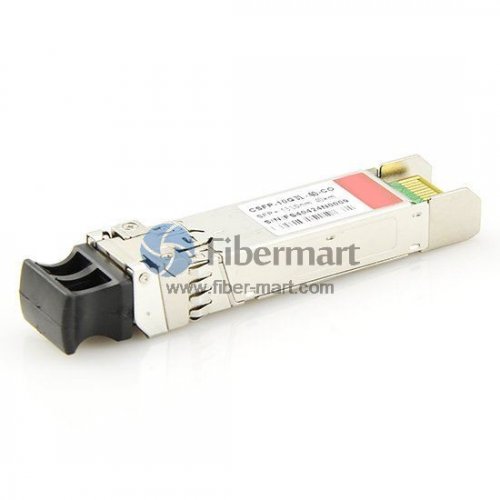
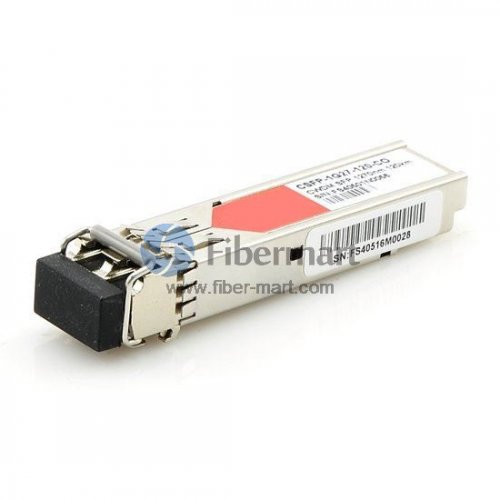
SFP stands for “Small Form-factor Pluggable.” It is most often used for Fast Ethernet of Gigabit Ethernet applications. They are capable of supporting speeds upto 4.25 Gbps. It interfaces a network device motherboard (for a switch, router, media converter or similar device) to a fiber optic or copper networking cable. It is specified by the SFP transceiver multi-source agreement.

1sfp.jpg


SFP+ can be referred to as an expansion of the SFP standard. It has the capability to support speeds of 10 Gbps or even higher over fiber. The SFP+ product family includes cages, connectors, and copper cable assemblies. It is also similar to the performance requirements of SFF-8431 and also supports 8G Fiber Channel and 10G Ethernet applications. SPF+ comes with various advantages. It is a more compact factor package than compared to that of XFP. The cost of SFP+ is also less than that to the XFP.

sfp+.jpg


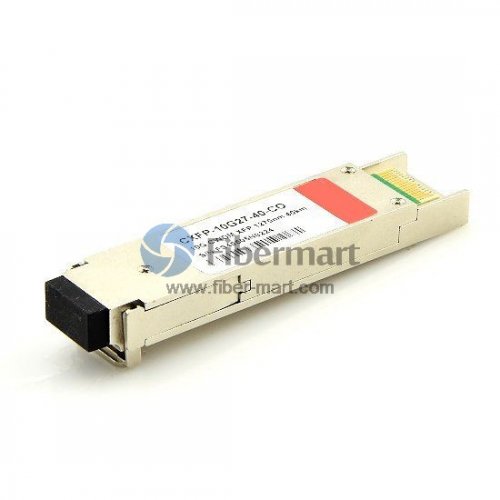
XFP is a standard for the transceivers. This type of transceiver is not dependent on the protocol. Generally, it operates at optical wavelengths corresponding to 850nm, 1310nm or 1550nm. The modules belonging to the XFP are hot swappable which means that the function of replacing the computer system components can be performed without shutting down the system. The specifications of XPF were developed by the XFP Multi Source Agreement Group.

4dd01cc90cd94c07f56960a662506541.image.500x500.jpg

SFP module:

  • SFP stands for Small Form Factor Pluggable and it is also called as mini GBIC.
  • SFP transceiver modules support SONET, Fast Ethernet, Gigabit Ethernet, Fibre Channel, and other communications standards.
  • Copper cables and fiber cables can be used in SFP module.
  • SFP supports data rate up to 5 Gbps.


SFP+ module:

  • SFP+ stands for small form factor pluggable plus.
  • SFP+ transceiver modules support Gigabit Ethernet, Fibre Channel, and other communications standards.
  • Twinax cables, Copper Cables and fiber cables can be used in SFP+ module.
  • SFP+ supports data rate upto 10 Gbps.


 XFP module:

  • XFP stands for 10 Gigabit Small Form Factor Pluggable.
  • XFP transceiver modules support SONET, 10 Gigabit Ethernet, 10 Gigabit Fibre Channel, and other communications standards.
  • XFP is a slightly larger form factor than the popular small form-factor pluggable transceiver, SFP, and SFP+.
  • XFP modules are hot-swappable and protocol-independent.
  • XFP supports data rate up to 10 Gbps.


Conclusion:

With growing demand for reliable and high speed mobile communication, optical transceivers are increasingly being used for the communication network infrastructure and be bound to thrive in optical network. 10G Ethernet is still the mainstream among small size data centers,The XFP transceiver module is not as popular as the SFP and SFP+ transceiver, but it still has a place. For more information, welcome to visit www.fiber-mart.com or contact us e-mail:service@fiber-mart.com