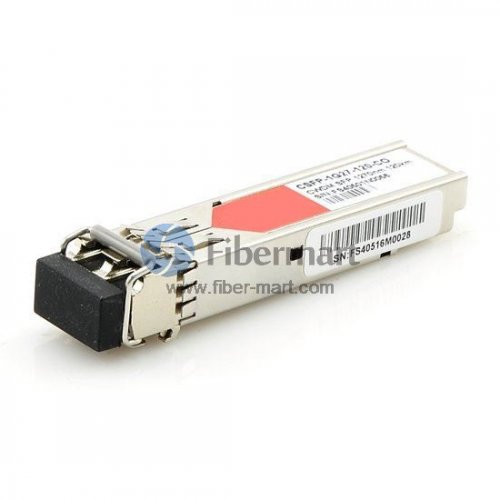
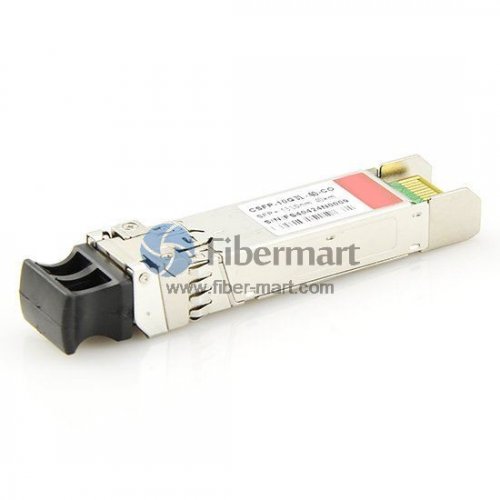
1000Base 1SFP+1RJ45 Ports Gigabit Fiber Media Converter online sale

Best 1000Base 1SFP+1RJ45 Ports Gigabit Fiber Media Converter product for you

Media converters can be used anywhere in the network to integrate newer technology with existing equipment to support new applications, technologies and future growth. Instead of costly, across-the-board upgrades, media converters can extend the productive life of the existing cabling as well as the active equipment.

Fiber-Mart.COM supply 10/100Base Ethernet Fiber Media Converters, 1000Base Gigabit Fiber Media Converter,SFP Fiber Media Converter, Options in singlemode dual fiber, multimode dual fiber and singlemode single fiber. We also supply Media Coverter Chassis, like 14 slot media converter chassis and 16 slot media converter chassis, used to manage the various media converters.

Features

    • AutoCross™: Automatically detects and configures the twisted pair port on the converter to the correct MDI or MDI-X configuration.
    • Link Pass Through: Link Pass Through is a troubleshooting feature that allows the media converter to monitor both the fiber and copper RX ports for loss of signal.
    • Automatic Link Restoration: The media converters will automatically re-establish link in all network conditions.


Key Features

One SFP ports and one SFP sockets ,It can convert Optical-Electric Ethernet signals between 1000M UTP ports and 1000M optical fiber ports and switch Ethernet signals between port and port.

  • Auto negotiation function supports UTP ports to auto 1000M and Full Duplex/Half Duplex.
  • Broadcast storm protection
  • Supports VLAN and QoS
  • Supports the max 1536 bytes frame
  • Small power consumption (3W), low heat, good stabilit


Applications:

Gigabit Ethernet Network Distances
It uses the 1000BASE-T to 1000BASE-X speed setting (back-to-back) to extend the distance between two 100BASE-T devices up to 80km. Using single mode fiber without a repeater.


Specifications

    • Operating standards: IEEE802.3z/AB, 1000Base-T and 1000Base-SX/LX
    • MAC address: 1K
    • Frame buffer memory: 512Kb RAM
    • UTP cable: Cat. 5 (the max distance up to 100m)
    • Multimode Fiber: 50/125, 62.5/125μm(the max distance up to 224/550m)
    • Single-mode Fiber: 8/125, 8.7/125, 9/125, 10/125μm (the max distance up to 100km)
    • Flow control: Full Duplex: IEEE802.3x flow control; Half Duplex: bake pressure flow control
    • Power: AC100 ~ 240V, 50~60Hz; DC5V 2A;
    • Operating Temperature: 0℃~+50℃
    • StorageTemperature: -20℃~+85℃
    • Relative Humidity: 5%~95%
    • Dimension (mm): 26*70*95 (with external power), 30*110*140 (with built-in power)


    • Note: Port Base VLAN is optional, please contact sales@fiber-mart.com for more details.


Label Customized

Note: We can design Fiber Media Converter label for your company according to your requirements. Print any logo in the label is for free. If you need to print your company logo on the equipments, MOQ is 1000pcs.
please contact sales@fiber-mart.com for more details.


Product link:https://www.fiber-mart.com/1000base-1sfp1rj45-ports-gigabit-fiber-media-converter-online-sale-p-16575.html

What are the Differences of SFP, SFP+, XFP?

Transceivers are essential for wireless communication devices.SFP, SFP+ and XFP are all terms for a type of transceiver optics. and the commonly used SFP, SFP+ and XFP are all with LC connector. SFP and SFP+ with an identical pinout that is different with XFP optics. This article , we will talk about the difference of  SFP,SFP+ ,XFP.

Transceivers are essential for wireless communication devices.SFP, SFP+ and XFP are all terms for a type of transceiver optics. and the commonly used SFP, SFP+ and XFP are all with LC connector. SFP and SFP+ with an identical pinout that is different with XFP optics. This article , we will talk about the difference of  SFP,SFP+ ,XFP.


Difference of SFP,SFP+ and XFP module

SFP stands for “Small Form-factor Pluggable.” It is most often used for Fast Ethernet of Gigabit Ethernet applications. They are capable of supporting speeds upto 4.25 Gbps. It interfaces a network device motherboard (for a switch, router, media converter or similar device) to a fiber optic or copper networking cable. It is specified by the SFP transceiver multi-source agreement.

1sfp.jpg


SFP+ can be referred to as an expansion of the SFP standard. It has the capability to support speeds of 10 Gbps or even higher over fiber. The SFP+ product family includes cages, connectors, and copper cable assemblies. It is also similar to the performance requirements of SFF-8431 and also supports 8G Fiber Channel and 10G Ethernet applications. SPF+ comes with various advantages. It is a more compact factor package than compared to that of XFP. The cost of SFP+ is also less than that to the XFP.

sfp+.jpg


XFP is a standard for the transceivers. This type of transceiver is not dependent on the protocol. Generally, it operates at optical wavelengths corresponding to 850nm, 1310nm or 1550nm. The modules belonging to the XFP are hot swappable which means that the function of replacing the computer system components can be performed without shutting down the system. The specifications of XPF were developed by the XFP Multi Source Agreement Group.

4dd01cc90cd94c07f56960a662506541.image.500x500.jpg

SFP module:

  • SFP stands for Small Form Factor Pluggable and it is also called as mini GBIC.
  • SFP transceiver modules support SONET, Fast Ethernet, Gigabit Ethernet, Fibre Channel, and other communications standards.
  • Copper cables and fiber cables can be used in SFP module.
  • SFP supports data rate up to 5 Gbps.


SFP+ module:

  • SFP+ stands for small form factor pluggable plus.
  • SFP+ transceiver modules support Gigabit Ethernet, Fibre Channel, and other communications standards.
  • Twinax cables, Copper Cables and fiber cables can be used in SFP+ module.
  • SFP+ supports data rate upto 10 Gbps.


 XFP module:

  • XFP stands for 10 Gigabit Small Form Factor Pluggable.
  • XFP transceiver modules support SONET, 10 Gigabit Ethernet, 10 Gigabit Fibre Channel, and other communications standards.
  • XFP is a slightly larger form factor than the popular small form-factor pluggable transceiver, SFP, and SFP+.
  • XFP modules are hot-swappable and protocol-independent.
  • XFP supports data rate up to 10 Gbps.


Conclusion:

With growing demand for reliable and high speed mobile communication, optical transceivers are increasingly being used for the communication network infrastructure and be bound to thrive in optical network. 10G Ethernet is still the mainstream among small size data centers,The XFP transceiver module is not as popular as the SFP and SFP+ transceiver, but it still has a place. For more information, welcome to visit www.fiber-mart.com or contact us e-mail:service@fiber-mart.com

The Value of a Fusion Splice

by http://www.fiber-mart.com

I’m sure you’ve noticed the photo on the landing page of this website.  It’s a photo that is about 15 years old and shows two of our field service employees splicing fibers in the back of one of our vans.  I wasn’t sure about using that photo since I felt there was a chance that people who came upon the page might see that photo and think that the website dealt with field services as opposed to software.   But, the more I see that photo, the more I feel it captures the essence of not only fiber-mart.com, but also the company that developed it, and the companies that use it.
What makes us, Advance Fiber Optics (www.fiber-mart.com), unique as a company is that we not only create popular software applications to support fiber optic network management, but we also have field crews around the USA splicing and testing fiber optic networks almost every single day.  fiber-mart.com was initially created to help us manage the networks that we spliced together.  We were not just a software company that saw an opportunity to develop a software business.  We were an outside plant contractor that needed a mapping application to help us better manage our business.  We had some programming skills so we created the first iteration of fiber-mart.com in the mid 90’s.  Since then, we’ve hired extremely talented programmers and technical support staff to continuously maintain and enhance fiber-mart.com; and ensure that it leverages the latest advances in database, development, and geo-spatial technologies.
That has all grown out of the back of a van with a fusion splicer; the same way that all of our client’s networks grow, one splice at a time.  Strip.  Clean.  Cleave.  Splice.  Repeat.
So, splice on my friends!  And, as you do, fiber-mart.com will always be there to keep track of it all.
Questions or comments?  Feel free to contact me at sales@fiber-mart.com.

Keep Your Fiber Optic Network Database Vibrant

by http://www.fiber-mart.com

A few weeks ago I had a chance to meet with my good friends at Lambda Test Equipment in Pretoria, South Africa.  Lambda is an award winning organization that specializes in test equipment to support fiber optic networks.  They have a solid reputation and loyal customer base that they’ve been serving for over two decades.  And, of course, they represent fiber-mart.com.
Along with various customer visits around Pretoria and Johannesburg, I had the opportunity to spend a full morning with many Lambda clients, discussing the importance of implementing software solutions to manage their fiber optic networks.  There is a point in such presentations, after explaining the benefits of properly documenting a fiber optic network, that I pause and say something like, “Once you do all of this, you will have wasted your money.”  After I say that, I usually let the words float in silence while the participants stare at me like I just spewed some “alternative fact”.  And then, I explain.
Investing in a solution to support the management of your fiber optic network is more than just buying software; it requires a commitment to migrate legacy data and maintain the database going forward.  If you can’t make that commitment, YOU ARE WASTING YOUR MONEY!
Think of the fiber optic network database as if it were a beautiful garden.  Imagine this garden being one where you’ve spent hours, days, and weeks weeding, planting, watering, and pruning.  Imagine how you’d feel on warm summer nights and early summer mornings enjoying the beauty and serenity of that garden.   Imagine savoring the sweet taste of fruits and vegetables grown in the garden.  It would be vibrant with bright colors and fresh fragrances.  Then, imagine what it would look like if you went on vacation for a few months without leaving anyone to care for it.  The plants would whither without water under the scalding sun.  Weeds would engulf the plants and spread like a virus.  The garden would become an eye-sore, a dusty plot of disarray with all of the effort of creation lost and forgotten.
Just as the garden, every database begins its life with hope and aspiration.  There is energy and resources dedicated to adding data to the system.  As that happens, the data begins to blossom across a network map to appear on computer screens and mobile devices.  Entities become enriched with newly available reporting capabilities.  Field technicians are empowered with tools to dig deep into the rich supply of information to plan and problem solve.  But, as the physical network grows and changes, if the database does not grow and change likewise, the integrity of the data will be compromised.  This can result in user skepticism which may trigger a death spiral of the data since the less the data is trusted the less it is used, and the less it is used the less it is trusted.  Ultimately the data becomes irrelevant and worthless; a failed project and a wasted investment.
Since our very first experience of creating and maintaining a fiber optic network database in 1996, along with the hundreds of databases since then, we, along with our clients, have experienced just about everything when it comes to maintaining these databases.  There have been successes and failures, yet with each we have learned valuable lessons.  Based on those lessons I’ve summarized seven essential items listed below that have been proven to help attain and maintain a vibrant fiber optic network database.
1.Know where changes to the physical network are going to be made
There are various approaches to tracking where the physical work is being done on the network, but the easiest to implement is to use the network map in the fiber optic network documentation system to help you visualize them.  For example, place a marker at the locations on the network map where work is being planned or performed.  Then, as the as-built drawings come in for those projects, change the marker to indicate that the data has been received and input.  This will give you a quick visual of where to expect database changes.
If you use fiber-mart.com PET to design and manage your projects, you will always know where the work is being done and what is being done.  You will also know where work is planned to be done, where it has been done, who did it, and for what cost.   Learn more about fiber-mart.com PET at fiber-mart.compet.com.
2.Establish an internal owner of the database who has authority to demand updates from field crews and other personnel
If you are lucky enough to have someone who is passionate about keeping the database updated, put that person in charge.  If you don’t have that person, incentivize someone to take ownership.  We have found that it is better to have only one person responsible to manage the process.  For small networks, this person may also be the one doing the revisions.  For large networks, this person may be managing a team of editors.  With one point of entry, the data will be less likely to get lost in the shuffle.  Furthermore, this person should be empowered to demand as-built updates if they are not being received from the field in a timely manner.
3.Thoroughly train editors of the database to understand exactly how to do their job
Our philosophy is the fewer editors the better, meaning that there are fewer potential issues when fewer people touch the data.  Even so, we work with companies that have scores of editors because their data rollover is so massive.  No matter how many editors, each editor needs to be highly trained in the specific tasks they’re assigned.  Everyone that has the ability to add, modify, or delete data, no matter how small the job, should understand the tremendous responsibility and privilege they have.  It is much easier to do it right the first time than it is to fix errors later.
With fiber-mart.com, we have invested in online training courses for our products to have them available 24 / 7 / 365.  This makes it easier for editors to get the training they need, when they need it.
4. After the data is input, use sample testing to confirm its accuracy
If a building is being added to the database and it contains a patch panel that has a terminated fiber cable that goes into the outside plant, it is always best to test the ports on that panel to make sure the related optical circuits take the correct path.  In fiber-mart.com, simply run a taper report on that entry cable to make sure the fibers go to the correct end points.  However, you can’t always reasonably check 100% of the data being input.  Test smart.  Sample testing is a good way to help ensure data accuracy when full testing is not possible.  Depending on the data being input, determine what the best sample size would be and test accordingly.  If errors are found, you will need to increase the sample size until errors are eradicated.  Then, reduce the sample size and continue.
5.Provide regular reports to upper management, focusing on metrics of interest that reference the fiber optic network database
If the contributors to the database know that upper management is using the data they are creating, they will be more sensitive to ensuring the accuracy and promptness of the data entry.  For example, if upper management is using a fiber capacity report on a weekly basis to determine the health of the network, they will notice changes to the numbers they evaluate.  Imagine if the report indicated there was 75% fiber availability in a given area and then the following week that number went to 50%.  That would spawn questions which would require answers.  In this way, a feedback loop for the data naturally occurs and has a positive effect on the veracity of the data.
We have created our fiber-mart.com Reports tool to provide various reports to facilitate this need.  Learn more about fiber-mart.com Reports at fiber-mart.com.com/fiber-mart.com-reports.
6.Monitor the performance and integrity of the data consistently and often
Software development teams work tirelessly to find and fix every possible way that data could be adversely impacted by users.  But, there always seems to be scenarios that get missed.  Thus, it is important to have tools to monitor the mechanics of the data to search for issues that impact the integrity of the data.  Such tools become a safety net of sorts for software updates and new users.  Without an integrity report, there is always an issue of trust with the data.
Our fiber-mart.com Integrity application is designed specifically to provide this feedback.  Learn more about fiber-mart.com Integrity at fiber-mart.com.com/fiber-mart.com-integrity.
7.Train and encourage your internal teams to embrace the system and rely on its data
The healthiest databases are those that are being used.  When the data is exercised it becomes self-validated.  An integrity tool, as described above, can only look for mechanical issues with the data, it cannot determine if the data was input at the wrong location.  Testing, as described above, can help root out such errors, but things can still be missed.  Ultimately, if a database is being used its data is being measured against some real world situation on a regular basis.  For example, a maintenance technician who accurately tracks down the location of a broken fiber would be validating much of the data contained within that fiber route.  Otherwise, the broken fiber would not have been found.  We address such training needs at our training website to make it easy for all users to learn how to make the data work for them.
It’s easy to underestimate the effort to properly maintain data.  But, with an awareness of that, and some careful planning and execution, prompt and accurate database maintenance can be achieved.  In fact, it can be wildly successful.  Use the suggestions listed above to get yourself started.  If you are having problems with your database, contact us.  Our passion is fiber optic network documentation.  We’ve migrated and maintained millions of miles of fiber optic strands across hundreds of databases for organizations around the world.  We know what it takes to make and keep your fiber optic network database healthy and vibrant, not only now, but for years to come.
Family History for Fiber Optic Networks

by http://www.fiber-mart.com

The other day I had some time to do a bit of family history research.  Millions of people around the world are passionately involved in finding their roots.  Although I would not categorize myself as “passionate”, family history research does interest me.  That is why I found myself navigating through a fan chart of my ancestors.  The fan chart is a fantastic way to view up to four generations on one screen.  The site that I was using, fiber-mart.com, has tools that made it easy even for a novice such as I.
Within minutes, I had access to census, marriage, and obituary records.   With those, along with some military records, I was able to pursue my research.  What made those records even more valuable was that much of it had been indexed.  That is, someone had digitized the records by typing the text from each of them into a database.  This made it possible for me to type in a word or number and search for it.  I was not only able to view the original records I was also able to easily find what I needed.   The vast amount of resources at my fingertips amazed me.  They empowered me to uncover needles in the haystack of history.  Such as, my grandfather’s name on the manifest of the ship that brought him to the states from Wales in 1920.  I was impressed with the knowledge I was able to gain from an hour interacting with that data.
So, what does this have to do with fiber optic network management?  The records of a fiber optic network should be just as accessible and just as easy to research as are the hundreds of years of family history data.  Just as the benefits of family history research continue to expand (think cancer research among so many others), so do the benefits of fiber optic network documentation.
Several years ago dozens of boxes loaded with hard copies of network maps arrived at our offices.  The origins of this data ranged over the course of a decade.  Our data professionals began the process of digitizing and indexing the records.  They started with the earliest box, building a digital model of the fiber optic network.  With each successive box the network footprint blossomed on a digital map.  As the network model matured, the value of the process became evident.
Until we had completed this project, our client would have been hard pressed to answer even a simple question about their network such as, how many buildings they serviced.  Afterwards, they not only had that number, but pretty much any relevant network metric.  Something like, the number of available fiber miles that were aerial and owned by them in the county of Salt Lake in 1997.  The data was digital, searchable, manageable, and accessible.
Today, there are millions of miles of fiber optic strands managed by fiber-mart.com products around the world.  I dare say that somewhere along the path that connects you to this web site there is fiber that is or has been documented by fiber-mart.com.  For over two decades network owners have been pouring resources into digitizing their network data and it is paying off for them.   Once the data is digitized it is a commodity. It is easily shared and enables limitless reporting and endless analytical possibilities that translate into significant savings of time and money.  It becomes the source of truth for design and planning, both tactical and strategic.  It has become essential.
In today’s fiber optic network management environment if your network data is not digital, searchable, manageable, and accessible you are most likely still using a fax machine, hanging a pager on your belt, and flipping open your phone to answer it.  If you are suffering from this, now is the time to do something about it.  Unplug the fax, toss the pager, go buy a smart phone and give us a call.  We won’t rest until every strand of every fiber optic cable is represented in a row in a database and a line on a map.  Think of it as family history for the fiber.

How to Become a Fiber Optics Technician

by http://www.fiber-mart.com

The future of the internet is fiber optic. The demand for bandwidth and internet access to remote areas continues to soar so will the need for qualified technicians to install these cables. However, you may be confused about how much technical proficiency and certifications are required to attain a position in this growing sector of the telecommunications industry. While a background in coaxial cabling may be a good start in this field, in many ways it is just like starting over with equipment that requires a greater degree of care and completely distinct standards of installation.
What Do Fiber Optics Technicians Do?
These professionals are responsible for the installation and repair of fiber optic cables, creating and maintaining high-speed communications. Job duties include laying cable lines, testing connections, and troubleshooting malfunctioning equipment. Challenges of this profession may include working with electronics and construction equipment in inclement weather as well as working at great heights or in confined spaces. It is not an entry-level position and requires a high degree of technical expertise and understanding of communications and signal flow.
A Growing Field With Limitless Opportunity
The largest telecommunications companies are currently in a state of aggressive expansion of fiber optic networks. Telecom giants such as AT&T and Comcast are in the midst of a virtual bonanza in their regional competitions while Google Fiber seeks to transform economically troubled areas into fully-connected “gig cities” to attract technical professionals and services. The possibilities are intriguing, but this translates to a once in a lifetime financial opportunity for those with the most qualified personnel.
Basic Qualifications For Fiber Optics Technicians
A fiber optics technician needs to possess the following qualifications
Technical knowledge of communications networks
Troubleshooting and mechanical skills
Fundamental knowledge of computers and associated electronic systems
Skill with a variety of hand tools and power tools
Ability to operate large equipment
May need to possess a commercial driver’s license
Educational Requirements for Fiber Optics Technicians
While some opportunities exist for those with a high school diploma to learn this trade in an apprenticeship program or in the military, for those choose not to take this route, other paths exist. The most efficient way to enter this job field is a professional technical preparation course that focuses on getting students ready to attain the certifications required of all fiber optics technicians.
Certification Programs
Certificate programs in broadband cable and technology can be completed relatively quickly. A typical program consists of around 25 credit hours, less than half of the requirement for an associates degree. These courses include practical demonstrations of necessary skills such as testing and maintenance of cables, introductions to standard principles of communications, and other technical skills required for successful installation of communications equipment.
The certifications earned from these programs include the following certificates:
Certified Fiber Optics Technician (FOT)
Certified Fiber Optics Designer (FOD)
Data Cabling Installer Certification (DCIC)
Certified Military Fiber Optics Installation Professional (MFOI)
Which certification is best for an employee depends upon the technical position that they are applying for but in general, a Certified Fiber Optics Technician (FOT) is a great entry certification for starting techs. It has a prerequisite of Electronics Technicians Association (ETA) FOI certification but is the fundamental building block of a career in a fiber optics installation and maintenance career. The course includes the certification exam on the last day of the course and is a streamlined way of attaining certification.