We know the way that cables are attached to the system is quite essential to the performance of the telecommunication network. Joining optical fibers with a fiber optic pigtail is proven and considered to be an effective way to ease fiber termination. As the cable is connected properly, it enables optical signals to pass with little return loss and low attenuation. Fiber optic pigtail offers an optimal way to joint optical fiber, which is used in 99% of single-mode applications.
- What is Fiber Optic Pigtail ?
Fiber optic pigtail is a fiber cable end with fiber optic connectors at only either side of the cable while leaving sleep issues no connectors, so the connector side could be from the equipment and the other part can be melted with optical cable fibers.
Fiber optic pigtails are utilized to achieve accurate mounting for precision alignment of fiber optical components. They’re usually used with fiber optic management equipment like ODF, splice closures and cross cabinets.

A fiber pigtail is really a single, short, usually unbuffered, optical fiber which has an optical connector pre-installed on one end along with a period of exposed fiber in the other end. The end of the pigtail is stripped and fusion spliced to a single fiber of a multi-fiber trunk. Splicing of pigtails to each fiber within the trunk “breaks out” the multi-fiber cable into its component fibers for connection to the end equipment.
Fiber pigtails can have female or male connectors. Female connectors might be mounted in a patch panel, often in pairs although single-fiber solutions exist, to allow them to be connected to endpoints or other fiber runs with patch fibers. Alternatively they can have male connectors and plug directly into an optical transceiver.

2. Fiber Optic Pigtail Types
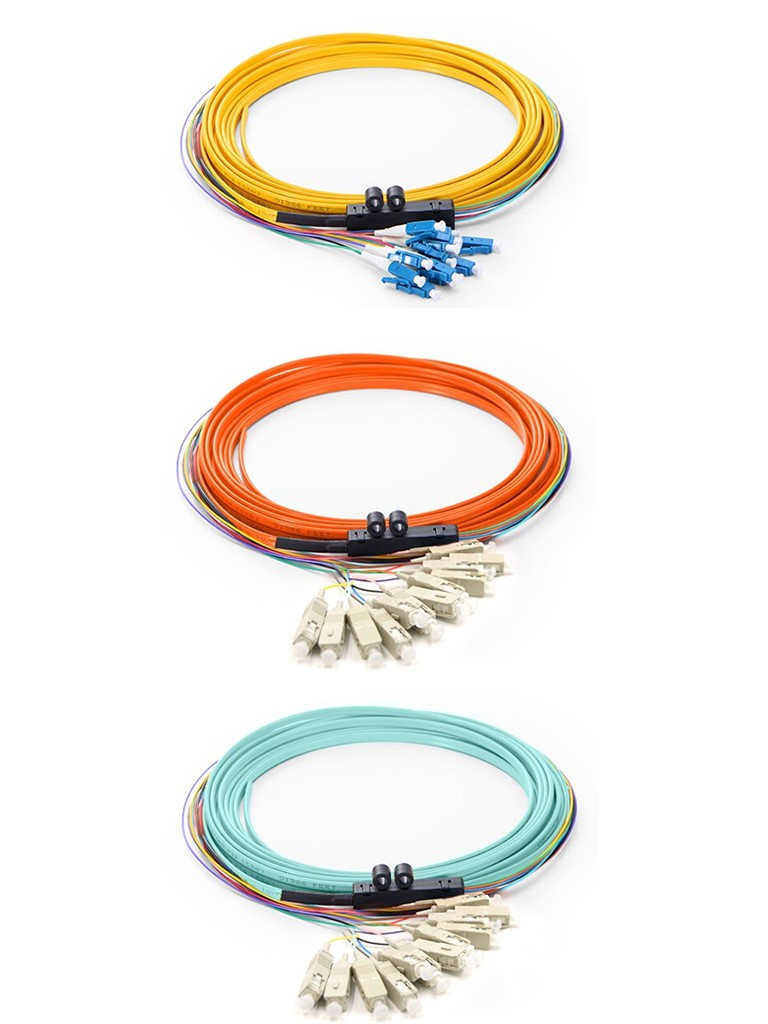
Fiber optic pigtails are available in various types: Grouped by pigtail connector type, there are LC fiber optic pigtails, SC fiber pigtails and ST fiber pigtails, etc. By fiber type, there are single-mode fiber optic pigtail and multimode fiber optic pigtail. And by fiber count, 6 fibers, 12 fibers optic pigtails can be found in the market.
Fiber optic pigtails can be divided into single-mode (colored yellow) and multimode (colored orange) fiber. Multimode fiber optic pigtails use 62.5/125 micron or 50/125 micron bulk multimode fiber cables and terminated them with multimode fiber optic connectors at one end. 10G multimode fiber cables (OM3 or OM4) are also available in fiber optic pigtails. The jacket color of 10G OM3 and OM4 fiber optic pigtail is usually aqua. Single-mode fiber pigtail cables use 9/125 micron single-mode fiber cable and terminated with single-mode fiber connectors at one end.
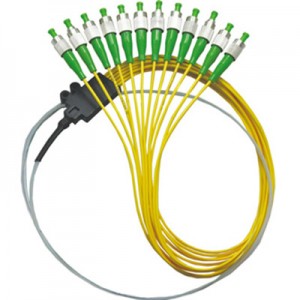
According to different types of pigtail cable connector terminated at the end, there are LC fiber pigtail, SC fiber pigtail, ST fiber pigtail, FC fiber pigtail, MT-RJ fiber pigtail, E2000 fiber pigtail and so on. With different structures and appearance, each of them has their own advantages in different applications and systems. Let’s go through some widely used ones.
SC Fiber Optic Pigtail: SC pigtail cable connector is a non-optical disconnect connector with a 2.5mm pre-radiused zirconia or stainless alloy ferrule. SC fiber pigtail is economical for use in applications such as CATV, LAN, WAN, test and measurement.
FC Fiber Optic Pigtail: FC fiber pigtail takes the advantage of the metallic body of FC optical connectors, featuring the screw type structure and high precision ceramic ferrules. FC fiber optic pigtails and its related products are widely applied for the general applications.
ST Fiber Optic Pigtail: ST pigtail connector is the most popular connector for multimode fiber optic LAN applications. It has a long 2.5mm diameter ferrule made of ceramic (zirconia), stainless alloy or plastic. Hence SC fiber pigtails are commonly seen in telecommunications, industry, medical and sensor fields.
Like fiber optic patch cords, fiber optic pigtails can be divided into UPC and APC versions. Most commonly used types are SC/APC pigtail, FC/APC pigtail and MU/UPC pigtail.
- By Application Environment
Some pigtail cables are specially installed to withstand the harsh or extreme environments, so here comes armored fiber pigtail and waterproof fiber pigtail.
Armored Pigtail: enclosed with stainless steel tube or other strong steel inside the outer jacket, armored fiber optic pigtails provide extra protection for the fiber inside and added reliability for the network, while reduce the unnecessary damage caused by rodents, construction work, weight of other cables.
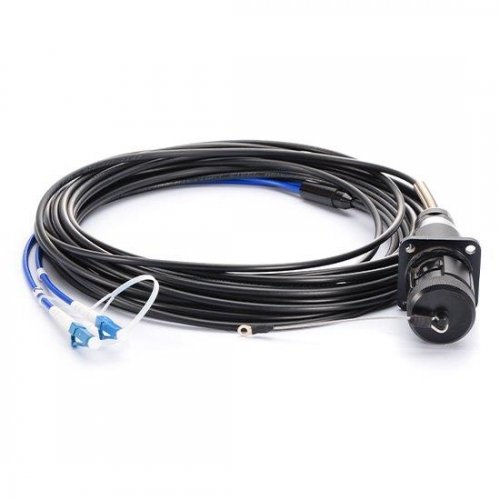
Waterproof Pigtail: designed with a stainless steel strengthened waterproof unit and armored outdoor PE (Poly Ethylene) jacket, waterproof fiber pigtail is a great fit in harsh environments, like communication towers, CATV and military. Waterproof pigtail cable boosts good toughness, tensile and reliable performance, facilitating the use in outdoor connections.
Fiber optic pigtails could have 1, 2, 4, 6, 8, 12, 24 and 48 strand fiber counts. Simplex fiber optic pigtail has one fiber and a connector on one end. Duplex fiber optic pigtail has two fibers and two connectors on one end. Each fiber is marked “A” or “B” or different colored connector boots are used to mark polarity. Similarly, 4, 6, 8, 12, 24, 48 and more than 48 fibers fiber optic pigtails have their corresponding feature.
Note: Fiber pigtails have female or male connectors. Female connectors could be mounted in a patch panel. And they also have male connectors that plugged directly into an optical transceiver.
3. How to Select Quality Fiber Pigtails?
Fiber optic pigtails are attached to cables by fusion or mechanical splicing, both of which provide a fast termination method. Basically, fiber pigtail assemblies are cable assemblies, which means the parts contained in fiber pigtail—a connector, a ferrule, standard fiber and jacket types, are components that every experienced fiber technician is familiar with. Notice that always ordering fiber pigtails a few feet more than you think you`ll need. The extra slack allows for splicing errors to be corrected, or you may have to start with another fiber pigtail. Saving More Labour Cost and Time, One of the benefits of fiber optic pigtail is lower labor costs: given the access to a fusion splicer, you just splice the fiber pigtail cable right onto the cable in a minute or less.
The quality of fiber optic pigtail is typically high because the connectorized end is attached in a controlled environment–the factory. And the factory can make single-mode pigtail assembly more accurately than a field termination can be done. Testing a fiber pigtail in the field is not easy, but in the factory, you are dealing with credible measurements. Which on the other hand saves much time spent on field termination.
4. Conclusion
Fiber optic pigtail serves as a feasible and reliable solution for easier fiber termination, which effectively contribute to save plenty of operating time and labour cost. The performance of fiber pigtail matters a lot, so the quality of connector, ferrule material as well as cable length of pigtails should be considered to ensure easier fiber termination.


 Fiber Optic Blog