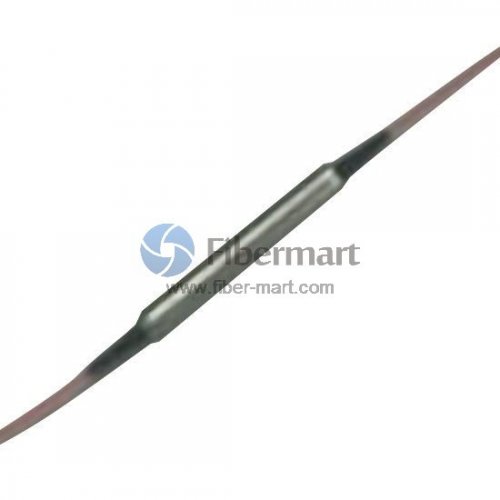
What are polarization maintaining fibers?
In the most common an optical fiber in which the polarization of linearly polarized light waves launched into the fiber is maintained during propagation, with little or no cross-coupling of optical power between the polarization modes.
In the most common an optical fiber in which the polarization of linearly polarized light waves launched into the fiber is maintained during propagation, with little or no cross-coupling of optical power between the polarization modes. Such fiber is used in special applications where preserving polarization is essential.
What is polarization maintaining(PM) fibers ?
Polarization Maintaining (PM) optical fiber is a key component of Fiber Optic Gyroscopes, devices that measure rotation in missiles, aircraft, ships and satellites. They are a type of interferometric sensor in which the phase difference between two light paths is measured.The polarization of light propagating in the fiber gradually changes in an uncontrolled (and wavelength-dependent) way, which also depends on any bending of the fiber and on its temperature. Specialised fibers are required to achieve optical performances, which are affected by the polarization of the light travelling through the fiber.optical fibers always exhibit some degree of birefringence, even if they have a circularly symmetric design, because in practice there is always some amount of mechanical stress or other effect which breaks the symmetry. As a consequence, the polarization of light propagating in the fiber gradually changes in an uncontrolled (and wavelength-dependent) way, which also depends on any bending of the fiber and on its temperature.
Principle of polarization maintaining(PM) fibers
The mentioned problem can be fixed by using a polarization-maintaining fiber, which is not a fiber without birefringence, but on the contrary a specialty fiber with a strong built-in birefringence (high-birefringence fiber or HIBI fiber, PM fiber). In general, optical fiber telecommunications applications, PM fiber is used to guide light in a linearly polarised state from one place to another. To achieve this result, several conditions must be met. Input light must be highly polarised to avoid launching both slow and fast axis modes, a condition in which the output polarization state is unpredictable.
Provided that the polarization of light launched into the fiber is aligned with one of the birefringent axes, this polarization state will be preserved even if the fiber is bent. The physical principle behind this can be understood in terms of coherent mode coupling. The propagation constants of the two polarization modes are different due to the strong birefringence, so that the relative phase of such copropagating modes rapidly drifts away. Therefore, any disturbance along the fiber can effectively couple both modes only if it has a significant spatial Fourier component with a wavenumber which matches the difference of the propagation constants of the two polarization modes. If this difference is large enough, the usual disturbances in the fiber are too slowly varying to do effective mode coupling.In addition, connectors must have been installed on the PM fibers in such a way that internal stresses do not cause the electric field to be projected onto the unintended axis of the fiber.
Applications
PM optical fibers are used in special applications, such as in fiber optic sensing, interferometry and quantum key distribution. They are also commonly used in telecommunications for the connection between a source laser and a modulator, since the modulator requires polarized light as input. They are rarely used for long-distance transmission, because PM fiber is expensive and has higher attenuation than singlemode fiber.Optical fibers may be applied in measurements of electrical current, particularly as so-called optical current transformers. Electric current sensors, in which optical fibers are used are small, light, cheap and safe. Their sensitivity is, however, due to the restricted magnetootpic properties of optical fibers, rather small. Moreover, these sensors are susceptible to deformations of the optical fiber. An increase of their sensitivity consists in lengthening the distance of optical fiber on which the magnetic field acts.PM fibers are applied in devices where the polarization state cannot be allowed to drift, e.g. as a result of temperature changes. Examples are fiber interferometers and certain fiber lasers. A disadvantage of using such fibers is that usually an exact alignment of the polarization direction is required, which makes production more cumbersome. Also, propagation losses are higher than for standard fiber, and not all kinds of fibers are easily obtained in polarization-preserving form.
Fiber-MART offer polarization components can be utilized in high power optical amplifiers and optical transmission system, test and measurement. the launch conditions at the optical fiber end face must be consistent with the direction of the transverse major axis of the fiber cross section. Fiber-Mart Polarizing Beam Combiner/Splitter (PBC/PBS) is a compact high performance light wave component that combines two orthogonal polarization signals into one output fiber, and also can split the incoming light into two orthogonal states. We also supply the Isolator type (IPBC/IPBS) which provides both polarization beam combining and optical isolation in one integrated component.for more information,you can visit www.fiber-mart.com.pls feel free to contact with us for any question . E-mail: service@fiber-mart.com
OM4 fiber optic cabling
When should i use OM5 Fiber
Fujikura 22S cladding alignment fusion splicer
Three connection modes of the switch
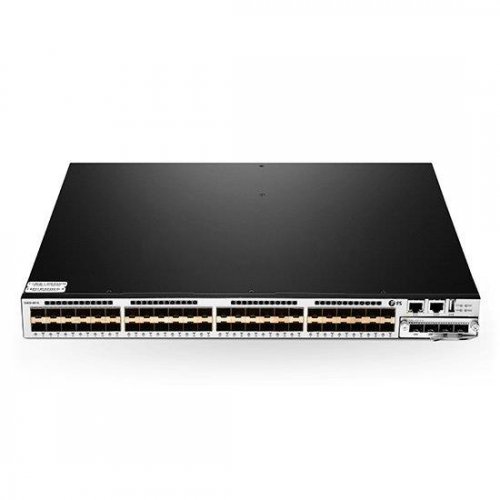
There are three main ways to connect switches: cascading, stacking, and clustering. Cascade mode is simple to implement, just an ordinary twisted pair can be, cost savings and basically not limited by the distance. The investment in the stacking method is relatively large and can only be connected within a short distance, which is difficult to achieve. Cluster connection means that multiple interconnected (cascaded or stacked) switches are managed as a logical device.

The stacking mode has better performance than the cascaded mode, and the signal is not easily depleted. Through the stacking mode, multiple switches can be managed in a centralized manner, which greatly reduces the management workload. If you really need to use cascading, you can also use the Uplink port. Connection method. Because this can guarantee the signal intensity to the greatest extent, if it is the connection between ordinary ports, it will certainly make the network signal seriously damaged.
1. Switch cascading
This is the most common way to connect multiple switches. It connects through the UpLink on the switch. It should be noted that the switches cannot be cascaded without limitation. Cascading over a certain number of switches will eventually cause broadcast storms, which will lead to a serious drop in network performance. Cascading is further divided into using ordinary port cascading and using Uplink port cascading.

1.1. Use ordinary port cascading
The so-called ordinary port is through a switch of a common port (such as RJ-45 port) to connect.
In the past, it was necessary to use the reverse connection. Now the two ends of the network cable are 568b line sequence. The jumper line is 568a line and 568b line sequence. According to the need, the old version of the device will distinguish the direct line from the crossover line. Now the devices are all common. What kind of consequences, the switch can automatically identify, and only the line can be wrong.
1.2 Use Uplink port cascading
In all switch ports, an Uplink port is included next to it. This port is provided exclusively for upstream connections. Simply connect the port to a port on the other switch except for the “Uplink port” through a straight-through twisted pair (note that it is not the Uplink port that is connected to each other).

2. Switch stack
This type of connection is mainly used in large networks where port requirements are relatively large. The stacking of switches is the quickest and most convenient way to expand ports. At the same time, the bandwidth after stacking is several-tenths of the speed of a single switch port. But not all switches support stacking, depending on whether the switch’s brand or model supports stacking. It is mainly connected through a dedicated connection cable provided by the manufacturer from the “UP” stack port of one switch to the “DOWN” stack port of another switch. All switches in a stack can be managed as a single switch.
Stacked switches are limited by the type and mutual distance. First, the stack switches must support stacking; in addition, the stacked connection cables provided by the manufacturers are generally around 1M, so the stacking function can only be used within a short distance.

3. Cluster
In the so-called cluster, multiple interconnected (cascaded or stacked) switches are managed as a logical device. In a cluster, there is generally only one switch that functions as a management switch,which is called a command switch. It can manage several other switches. In the network, these switches only need to occupy one IP address (only required by the command switch). Under unified management of the command switch, multiple switches in the cluster work together to greatly reduce management intensity.
It should be noted that different manufacturers have different implementations for clusters, and generally manufacturers use proprietary protocols to implement clusters. This determines the cluster technology has its limitations. Switches of different manufacturers can be cascaded but cannot be clustered.

Switching, stacking, and clustering are three different technologies. Cascading and stacking are prerequisites for implementing clusters. Clusters are used for cascading and stacking; cascading and stacking are implemented based on hardware; clusters are implemented based on software; cascading and stacking are sometimes similar (especially cascading and virtual Stacking), sometimes very different (cascade and real stacking).Please feel free to contact Fiber-Mart if you have any needs or questions.we will provide you with the most professional service.