CHOOSING FIBER OPTIC CABLE OR COPPER WIRE FOR COMMUNICATION

by http://www.fiber-mart.com

When computer networks were invented, copper wiring was used for the cables that handled the Internet. But nowadays fiber optic cable is more often used for new cabling installations and upgrades, including backbone, horizontal, and even desktop applications. They are more favored for today’s high-speed data communications, such as Gigabit Ethernet, FDDI, multimedia, ATM, SONET, Fiber Channel, or any other network that requires the transfer of large, bandwidth-consuming data files, particularly over long distances.
Fiber optic cables offer a number of advantages over copper.
Lower Cost–While fiber optic cable itself is cheaper than an equivalent length of copper cable, fiber optic cable connectors and the equipment needed to install them are more expensive than their copper counterparts.
Long Distance And High Capacity–Fiber optic cables carry communication signals using pulses of light. Only fiber optics can go the long distance. Not only is fiber optic cable capable of carrying far more data than copper, it also has the ability to carry that information for much longer distances. Fiber to the Home (FTTH) installations are becoming more common as a way to bring ultra-high speed Internet service (100 Mbps and higher) to residences.
Higher Bandwith–Fiber has a higher bandwidth than copper. Example: cat6 network cable is classified by the Telecommunications Industry Association (TIA) to handle a bandwidth up to 600 MHz over 100 meters, which theoretically, could carry around 18,000 calls at the same time. Multimode Fiber, on the other hand, would have a bandwidth of over 1000 MHz which could carry almost 31,000 simultaneous calls.
Adaptable To Any Environment–Fiber optic cables don’t mind roughing it. Since fiber optic cables are glass-based, glass fibers don’t only escape interference. They are virtually free from the threat of corrosion, too. While copper cabling is sensitive to water and chemicals, fiber optic cabling runs almost no risk of being damaged by harsher elements. Fiber optic cables can be used outdoors — and in close proximity to electrical cables –without concern. As a result, fiber optic cable can easily endure “living conditions” that coaxial cable just can’t, such as being put in direct contact with soil, or in close proximity to chemicals.
For reasons stated above, fiber optic cable is a more reliable means of communication. While the decision on using copper cables or fiber optic cables may be difficult. It will often depend on your current network, your future networking needs, and your particular application, including bandwidth, distances, environment, and cost. While in some cases, copper may be a better choice.
Copper works on simple ADSL connections since there is not much of a distance from a modem to a phone jack on a wall. Copper usually transmits data without loss at distances of two kilometers or less. On top of all that, the demand for bandwidth in an ADSL connection is often low enough (around 6 to 8 Mbps on average) to use copper wires.
As the mature of fiber optic cables production, they are more affordable. Choosing fiber optic cables or copper wire for your communication is completely up to your future networking needs and your particular application.

WHAT ARE THE ADVANTAGES AND DISADVANTAGES OF FIBER OPTIC CABLING

by http://www.fiber-mart.com

Fiber optic cabling consists of strands of purified glass, or even plastic, rods that conduct specific wavelengths of light, analogous to the electrons carried along a Copper Cable. However, light traveling through glass or plastic is not susceptible to the same problems that metal conductors are; The electromagnetic radiation that results from current traveling through a wire is not present in optical conductors, and optical conductors can be made much smaller than metal ones.
Advantages of Fiber Optic Cabling
There are four advantages of fiber optic cabling, these advantages explain why fiber is becoming the preferred network cabling medium for high bandwidth, long-distance applications:
1. Immunity to Electromagnetic Interference (EMI)
All copper cable network media sharing a common problem: they are susceptible to electromagnetic interference (EMI), fiber optic cabling is immune to crosstalk because optical fiber does not conduct electricity and uses light signals in a glass fiber, rather than electrical signals along a metallic conductor to transmit data. So it cannot produce a magnetic field and thus is immune to EMI.
2. Higher Possible Data Rates
Because light is immune to interference, can be modulated at very high frequencies, and travels almost instantaneously to its destination, much higher data rates are possible with fiber optic cabling technologies than with traditional copper systems. Data rates far exceeding the gigabit per second (Gbps) range and higher are possible, and the latest IEEE standards body is working on 100Gbps fiber based applications over much longer distances than copper cabling. Multimode is preferred fiber optic type for 100-550 meters seen in LAN network, and since single mode fiber optic cables are capable of transmitting at these multi-gigabit data rates over very long distances, they are the preferred media for transcontinental and oceanic applications.
3. Longer Maximum Distances
Typical copper media data transmission by the distance limits the maximum length of less than 100 meters. Because they do not suffer from the electromagnetic interference problems of traditional copper cabling and because they do not use electrical signals that can dramatically reduce the long distance, single-mode fiber optic cables can span 75 kilometers (about 46.6 miles) without using signal-boosting repeaters.
4. Better Security
The Copper cable transmission media is susceptible to eavesdropping through taps. A tap (short for wiretap) is a device that punctures through the outer jacket of a copper cable and touches the inner conductor. The tap intercepts signals sent on a LAN and sends them to another (unwanted) location. Electromagnetic (EM) taps are similar devices, but rather than puncturing the cable,they use the cable’s magnetic fields, which are similar to the pattern of electrical signals. Because fiber optic cabling uses light instead of electrical signals, it is immune to most types of eavesdropping. Traditional taps won’t work because any intrusion on the cable will cause the light to be blocked and the connection simply won’t function. EM taps won’t work because no magnetic field is generated. Because of its immunity to traditional eavesdropping tactics, fiber optic cabling is used in networks that must remain secure, such as government and research networks.
Disadvantages of Fiber Optic Cabling
With all of its advantages, many people use fiber optic cabling. However, fiber optic cabling does have a couple of disadvantages:
1. Higher Cost
The higher cost of fiber optic cabling has little to do with the cable these days. Increases in available Fiber Optic Cable manufacturing capacity have lowered cable prices to levels comparable to high end UTP on a per-foot basis, and the cables are no harder to pull. Ethernet hubs, switches, routers, NICs, and patch cords for UTP are very inexpensive. A high quality UTP-based 10/100/1000 auto-sensing Ethernet NIC for a PC can be purchased for less than $25. A fiber optic NIC for a PC costs at least four times as much. Similar price differences exist for hubs, routers, and switches. For an IT manager who has several hundred workstations to deploy and support, that translates to megabucks and keeps UTP a viable solution. The cost of network electronics keeps the total system cost of fiber-based networks higher than UTP, and ultimately, it is preventing a mass stampede to fiber-to-the-desk.
2. Installation
The other main disadvantage of fiber optic cabling is that it can be more difficult to install. Copper cable ends simply need a mechanical connection, and those connections don’t have to be perfect. Fiber optic cable can be much trickier to make connections for mainly because of the nature of the glass or plastic core of the fiber cable. When you cut or cleave (in fiber optic terms) the fiber, the unpolished end consists of an irregular finish of glass that diffuses the light signal and prevents it form guiding into the receiver correctly. The end of the fiber must be polished and a special polishing tools to make it perfectly flat so that the light will shine through correctly.

CISCO GLC-LH-SM SFP TRANSCEIVER MODULES

by http://www.fiber-mart.com

SFP module(Small form factor pluggable) is prefered to easier to change and easier for maintenance rather than traditional modules and is expected to perform at data speeds of up to five gigabits per second (5 Gbps), and possibly higher.
SFP interfaces between communication devices like switches, routers and fiber optic cables, and performs conversions between optical and electrical signals. SFP transceivers support communications standards including synchronous optical networking (SONET)/synchronous digital hierarchy (SDH), gigabit ethernet and fiber channel. They also allow the transport of fast Ethernet and gigabit Ethernet LAN packets over time-division-multiplexing-based WANs, as well as the transmission of E1/T1 streams over packet-switched networks.
SFP Transceivers have a wide range of detachable interfaces to multimode/single-mode fiber optics, which allows users to select the appropriate transceiver according to the required optical range for the network. Signal transmitting rate of SFP modules range from 100Mbps up to 4Gbps or more, working distance of these SFP transceiver modules can be from 500 meters to 100 kilo meters, working wavelength of different SFP modules are typically 850nm, 1310nm and 1550nm, there are also CWDM type SFP transceivers available. There are SFP product numbers below:
GLC-ZX-SM SFP, SFP-GE-F, SFP-GE-S, SFP-GE-L, SFP-GE-Z, GLC-SX-MM, GLC-LH-SM, GLC-T, CWDM-SFP-1470, CWDM-SFP-1490, CWDM-SFP-1510, CWDM-SFP-1530, CWDM-SFP-1550, CWDM-SFP-1570, CWDM-SFP-1590, CWDM-SFP-1610.
GLC LH SM is the Cisco 1000Base LX/LH SFP transceiver module, it is one of the most commonly use SFP. SFP units like the GLC-LH-SM in general have different transmitter and receiver types that allow the consumer to select the best option for their specific situation. Its primary function is to interface with a networking cable and increase the connectivity between two network devices such as mother boards, routers and media converters.
There are many options when it comes to finding a GLC-LH-SM. The GLC-LH-SM SFP Transceiver from the reseller is a Cisco brand mini-GBIC but can be used to work with anyone that builds SFP ports such as HP, Finistar, and Juniper among many others. Finding a compatible transceiver can eat up valuable time for IT pros who are upgrading networks and T3 systems provides the best value and support.
GLC-LH-SM SFP transceiver is a tool utilized to join Cisco machines like wan interfaces or network switches that make use of sfp transceiver module technological expertise. It is characterized by an LC type interface with a higher density as well as a smaller fiber optic connecter. It is suitable for both single and multimode use and has a working distance of 10 kilometers or 550 meters over MMF. It is compliant to IEEE standards in line with Gigabit Ethernet and comes in a variety of styles to ensure users have the exact choice for their needs.
The GLC-LH-SM is a SFP fiber optic transceiver works at a 1300nm wavelength. When utilized as GLC-SX-MM SFP, the unit has a tier-one laser of 1,300nm for medium range fiber applications. In MMF configuration, the maximum distance is 1,800 ft and on SMF the max distance is 10 Km (6.2 miles).

JUNIPER NETWORKS SFP MODULE EX-SFP-10GE-SR

by http://www.fiber-mart.com

With the rapid development of fiber optic technologies, 10G Ethernet products are coming to fit the increasing demand for bandwidth. SFP plus is the 10G fiber optic transceiver used for 10G Ethernet and other high speed transmissions.
SFP plus is the upgraded version of the former SFP transceivers (MINI GBIC), SFP is with higher data rate and new industrial standards. SFP is with more compact size compared with the former 10G transceivers X2 and Xenpak, it has greater ability for density installations.
Juniper SFP transceivers are the most cost-effective standards-based optical modules fully compatible with Juniper Switches & Routers. The Juniper SFP modules are tested in-house prior to shipment to guarantee that they will arrive in perfect physical and working condition before delivered worldwide. Fiberstore provides Juniper compatible SFP transceivers which can be equivalent to EX-SFP-10GE-SR, EX-SFP-10GE-LR, SFPP-10GE-SR, EX-SFP-10GE-ER, etc. And today, let me introduce Juniper EX SFP 10GE SR first.
Juniper EX SFP 10GE SR Brief Information
This Juniper compliant EX-SFP-10GE-SR is a 10GBASE SR SFP 850nm 300m transceiver module. The EX SFP 10GE SR transceiver module combines quality with low cost and gives you an ideal alternative except for the high price transceivers. The EX SFP 10GE SR is 100% compatible with all Juniper series switches and modules which support SFP transceivers.
Key Features
Operating data rate up to 10.3Gbps
850nm VCSEL Transmitter
TX Power :-6~-1dBm
Receiver Sensitivity:-11.1dBm
Distance up to 300m @50 / 125 um MMF
Single 3.3V Power supply and TTL Logic Interface
Duplex LC Connector Interface, Hot Pluggable
Compliant with MSA SFP+ Specification SFF-8431
Compliant with IEEE 802.3ae 10GBASE-SR/SW
Power Dissipation < 1.0W
Built-in Digital Diagnostic Function
Applications
10GBASE-SW at 9.953Gbps
10GBASE-SR at 10.3125Gbps
Other Optical Link
Juniper EX-SFP-10GE-SR
This SFP (mini-GBIC) transceiver module is designed for use with Juniper Networks network equipment and is equivalent to Juniper Networks part number EX-SFP-10GE-SR. This transceiver is built to meet or exceed the specifications of the OEM and to comply with Multi-Source Agreement (MSA) standards. This product is 100% functionally tested, and compatibility is guaranteed. The transceiver is hot-swappable input/output device which allows a 10 Gigabit Ethernet port to link with a fiber optic network. OEM specific configuration data is loaded on to the EEPROM of the transceiver at the factory, allowing this transceiver to initialize and perform identically to an OEM transceiver. This transceiver may be mixed and deployed with other OEM or third party transceivers and will deliver seamless network performance. A list of compatible network equipment is available on the Specs tab of this page.
fiberstore.com have a large quantity in stock transceivers and can ship in the Juniper EX SFP 10GE SR transceivers, you will find the cost effective modules here and you will find our Juniper EX SFP 10GE SR beyond your expectation, All of our module transceivers are tested in house prior to shipping to insure that they will arrive in perfect physical and working condition. Contact us today to save the time and cost by buying from original manufacturer directly. And now fiberstore is making a discount of 30% of the price about Juniper SFP.

Introduction of Loopback Cable  

When testing the transmission equipment, fiber optic loopback device is often used as the testing tool. It is known as the routing of electronic signals, digital data streams, or flows of items back to their source without intentional processing or modification. Fiber optic loopback is widely used for various applications. In terms of telecommunication, loopback is a hardware or software method to feed a received signal or data back to the sender. It is very useful for solving physical connection problems.This post will be a guide on how to choose a right loopback cable for specific transceiver module.
What is Loopback Cable?

When testing the transmission equipment, fiber optic loopback device is often used as the testing tool. It is known as the routing of electronic signals, digital data streams, or flows of items back to their source without intentional processing or modification. Fiber optic loopback is widely used for various applications. In terms of telecommunication, loopback is a hardware or software method to feed a received signal or data back to the sender. It is very useful for solving physical connection problems.This post will be a guide on how to choose a right loopback cable for specific transceiver module.

111

Types of Fiber Optic Loopback

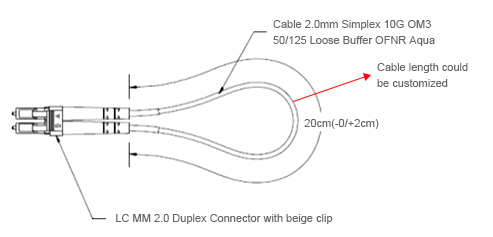
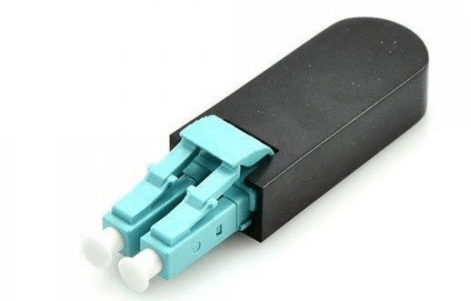
So, what is exactly the fiber optic loopback? Before deciding which loopback cable to use, we should firstly know the structure and classification of fiber loopback cable.By diagnosing the problems of optical equipment, fiber optic loopback provides an easy way to test the performance of the optical network devices. Generally, fiber optic loopback cable and fiber optic loopback module are both fiber optic loopbacks. Fiber optic loopback cable is the traditional fiber optic loopback with a visible cable. It is equipped with two fiber optic connectors on each end of the cable. When sticking the connectors together, the cable will shape like a loop. As for fiber optic loopback module, the biggest difference is that it has a enclosure to protect the inside cable. And the looped space is reduced for an easier usage and economic package.According to the optical connector type of the loopback, fiber loopback cables can be divided to LC, SC, FC, ST, MTP/MPO, E2000, etc. In testing fiber optic transceiver modules, the most commonly used are LC, SC and MTP/MPO loopback cables.
99

Figure 1: LC & SC Loopback Cable

The LC and SC loopbacks are made with simplex fiber cable and common connectors; it’s not difficult to understand their configurations. As for the MTP/MPO loopback, it is mainly used for testing parallel optics, such as 40G and 100G transceivers. Its configuration varies since the fiber count is not always the same in different applications.

8 Fibers MTP/MPO Loopback Cable Configuration

In a 8 fibers MTP/MPO loopback, eight fibers are aligned on two sides of the connector, leaving the central four channels empty. And the fibers adopt a straight configuration of 1-12, 2-11, 5-8, 6-7. The polarity channel alignment is illustrated in the following figure.

88

Figure 2: 8 Fibers Loopback Polarity Channel Alignment

12 Fibers MTP/MPO Loopback Cable Configuration

The only difference between the 12-fiber MTP loopback and the 8-fiber loopback is that the central four channels are not empty. Its alignment is 1-12, 2-11, 3-10, 4-9, 5-8, 6-7.

77

Figure 3: 12 Fibers Loopback Polarity Channel Alignment

24 Fibers MTP/MPO Loopback Cable Configuration

The 24 fibers MTP loopback also adopts type 1 polarity. Its alignment design is shown below.

66

Figure 4: 24 Fibers Loopback Polarity Channel Alignment

How to Use Loopback Cable?

The loopback cables are often used in conjunction with testing software to “loop” traffic right back into the port. If the data sent out into the loopback plug is identical to the data received from the loopback plug, you can assume that the basic communication functions of the port are working properly. So the common application of loopback cable is Loopback Test.

554

Loopback Test

Fiber loopback cable is often utilized to check whether the transceiver module is working perfectly as designed. As we all know, transceiver module has two ports, a transmitter port and a receiver port. The former one is to send out laser signals and the latter is to receive signals. When performing the loopback test, the fiber loopback cable can be directly plugged into the output and input port of transceiver module respectively (the ports at the ends of the connection must be compatible). Thus, during the testing process, the loopback cable directly routes the laser signal from the transmitter port back to the receiver port. Then we can compare the transmitted pattern with the received pattern to troubleshoot a defective node in the network. Fiber optic loopback testing is the easiest way to ensure that the transceiver works faultlessly. When selecting a suitable fiber loopback for the transceiver, we should consider the connector type, polish type, and cable type.

Application

When it comes to practical application, fiber optic loopback test is often employed for checking fiber optic transceivers. Since transceiver has two ports for receiving and transmitting the light signal, it is necessary to test the ports to see whether they are still under operation. Thus, fiber optic loopback test is the most convenient way for transceiver maintenance. The testing process is by routing the laser signal from the transmitter port back to the receiver port. Then the transmitted pattern is compared with the received pattern to make sure they are identical and have no error.

Conclusion

All in all, loopback cables play an important role in troubleshooting in laboratories and manufacturing environments. They facilitate the testing of simple networking issues and are available at very low costs.Similar to other cables, it also has multiple classifications of fiber types, connector types for different needs. The deployment of fiber optic loopback components has greatly saved the trouble for device checking. There is no doubt that using fiber optic loopback is an effective method in fiber optic communication. There are many loopback cable manufactures on the market, providing single mode and multimode fiber optic loopback plugs available with FC, LC, MT-RJ, SC connectors. Fiber-Mart is one of the fiber loopback cable providers, all loopback cables are precision terminated and feature extremely low loss characteristics for transparent operation in the test environment.I believe you can find a suitable products for your devices in Fiber-Mart. please contact us: product@fiber-mart.com.

10G Modules —XENAKIS Module, X2 optical module,10G XFP optical module,10G SFP+ optical module

10 gigabit Ethernet is a telecommunication technology that offers data speeds up to 10 billion bits per second. 10 gigabit Ethernet (10-Gigabit Ethernet) is also known as 10GE, 10GbE or 10 GigE.10G SFP+ transceivers are multi-purpose optical modules for 10Gbit/s data.

10 gigabit Ethernet is a telecommunication technology that offers data speeds up to 10 billion bits per second. 10 gigabit Ethernet (10-Gigabit Ethernet) is also known as 10GE, 10GbE or 10 GigE.10G SFP+ transceivers are multi-purpose optical modules for 10Gbit/s data.


Module Types


XENPAK – the original 10GbE pluggable optics.  Presents SC connectors

X2 – the successor to the XENPAK.  Presents SC connectors

XFP – the first of the small form factor 10GbE optics.  Presents LC connectors

SFP+ – a 10GbE optics using the same physical form factor as a gigabit SFP.  Because of this, many of the small SFP+ based 10GbE switches use 1G/10G ports, giving an added degree of flexibility.  Presents LC connectors.


10G Modules–XENAKIS Module

XENPAK became the new standard transceiver with increased support across longer distances and for multiple wavelengths. Unlike GBIC transceivers that sent information across either copper or fiber optic channels, XENPAKs included support for both networks, creating a better, more flexible module. And unlike the bigger GBIC transceivers, XENPAKs were capable of conveying data across short and long distances due to their configuration settings located inside the devices. When utilizing a single-mode configuration, networks create a single ray of light to send data across a long distance, while they use a multimode setup to transmit information across short distances. Both single and multimode fiber optics were utilized by networks, creating the XENPAK device ideal.

10G XENPAK

10G Modules—X2 optical module


X2 is a kind of optical transceiver module specified for 10-Gigabit Ethernet and 10G Fibre Channel applications.X2 defines a smaller form-factor 10 Gb/s pluggable fiber optic transceiver optimized for 802.3ae Ethernet,ANSI/ITUT OC192/STM- 64 SONET/SDH interfaces,ITUT G.709,OIF OC192 VSR,INCITS/ANSI 10GFC (10 Gigabit Fibre Channel) and other 10 Gigabit applications.X2 is initially centered on optical links to 10 kilometers and is ideally suited for Ethernet,Fibre Channel and telecom switches and standard PCI (peripheral component interconnect) based server and storage connections. X2 is physically smaller than XENPAK but maintains the mature electrical I/O specification based on the XENPAK MSA and continues to provide robust thermal performance and electromagnetic shielding. The 10GB X2 fiber optic transceivers series include X2-10GB-SR, X2-10GB-LR, X2-10GB-ER and X2-10GB-ZR, they are designed based on the X2 MSA and IEEE802.3ae. They’re created for the integrated systems solution provide, fiber optics distributor along with other IT distributors.

10G X2.jpg


10G Modules— XFP optical module


XFP is a standard for the transceivers. This type of transceiver is not dependent on the protocol. Generally, it operates at optical wavelengths corresponding to 850nm, 1310nm or 1550nm. Principal applications include 10 Gigabit Ethernet, 10 Gbit/s Fibre Channel, synchronous optical networking (SONET) at OC-192 rates, synchronous optical networking STM-64, 10 Gbit/s Optical Transport Network (OTN) OTU-2, and parallel optics links. They can operate over a single wavelength or use dense wavelength-division multiplexing techniques. The modules belonging to the XFP are hot swappable which means that the function of replacing the computer system components can be performed without shutting down the system. They include digital diagnostics that provide management which were added to the SFF-8472 standard. XFP modules make use of an LC fiber connector type to achieve high density.

10GBASE XFP.jpg

10G ModulesSFP+ optical module


SFP+ can be referred to as an expansion of the SFP standard. It has the capability to support speeds of 10 Gbps or even higher over fiber. The SFP+ product family includes cages, connectors, and copper cable assemblies. It is also similar to the performance requirements of SFF-8431 and also supports 8G Fiber Channel and 10G Ethernet applications. SPF+ comes with various advantages. It is a more compact factor package than compared to that of XFP.

10GBASE SFP+


Summary

10G fiber transceiver is designed for 10G or 10Gbit/s data transmission applications including 10 Gigabit Ethernet, 10 Gbit/s Fiber Channel, Synchronous optical networking. Fiber-Mart manufactures and supplies a complete range of 10G transceiver modules which can be Customized. For more information, welcome to www.fiber-mart.com or contact us by E-mail: service@fiber-mart.com