What are MTP / MPO Fiber Cables?

by http://www.fiber-mart.com

MTP/MPO — High-Density Fiber Optic Cabling
The quantity of data transmitted worldwide is growing exponentially and the need for ever-greater bandwidths is unrelenting. Though the current data volumes demanded in backbone cabling can still be handled with 10 GbE, the forecast trends will require the introduction of the next technologies, 40 GbE and 100 GbE. As a result, data centers must respond to provide sufficient capacities and plan for upcoming requirements. To meet this demand, 40G QSFP+ transceivers, MTP/MPO cables and other related products are now in the market. MTP/MPO cables in the data centers play an important role in ultra-high density cabling.
Why are MTP/MPO Cables Used?
The number of network connections in data centers is rising rapidly. Traditional fiber cables can make the data center crammed and difficult to manage. To solve this problem, data centers have to achieve ultra-high density in cabling to accommodate all of the cabling required. The MTP/MPO cables, which bring together 8, 12 or 24 fibers in a single interface have been proven to be a practical solution. Incorporating to meet the 40GBASE-SR4 and 100GBASE-SR10 standard, The MTP/MPO multi-fiber connector of MTP/MPO cables is about the same size as a SC connector but can accommodate 8, 12 or 24 fibers, thus offering savings in circuit card and rack space.
Details of MTP/MPO Cables
MTP/MPO cables are composed of MTP/MPO connectors and fiber optic cables, other connectors such as LC may also be found in some kinds of MTP/MPO cables. The fiber cables used are generally OM3 and OM4, which are laser optimized multi-mode optical fibers. It is important to have an overall understanding of MTP/MPO connectors (known as multi-fiber push-on and also as multi-path push-on).
MPO connectors are available in a female version (without pins), or a male version (with pins) as shown in the following picture. The pins ensure the exact alignment of the fronts of the connectors, and also they ensure the end faces of the fibers are not offset.
Noses and guide grooves (key) on the top side are the two other clearly visible features, which ensures the adapter hold the connector with the correct ends aligned with each other. Based on the placement of the key, two types of MPO adapters are available. One is “key-up to key-down”. It means the key is up on one side and down on the other. The two connectors are connected turned 180° in relation to each other. The other one is “key-up to key-up”. It means both keys are up. The two connectors are connected while in the same position in relation to each other.
Connection Rule
Always use one male connector and one female connector plus one MPO adapter when creating a MPO connection.
Never connect a female to a female or a male to a male. It should be connected with a male and a female as stated above. With a female-to-female connection, the fiber cores of the two connectors will not be at the exact same height because the guide pins are missing. That will lead to losses in performance. A male-to-male connection has even more disastrous results. There the guide pins hit against guide pins so no contact is established. This can also damage the connectors.
Never dismantle a MPO connector. The pins are difficult to detach from a MPO connector and the fibers might break in the process. In addition, the warranty becomes null and void if you open the connector housing.
MTP/MPO Cables
MTP/MPO Cable has the advantages of shorter installation times, tested and guaranteed quality and greater reliability. It has several different kinds of types.
Trunk Cables: trunk cables serve as a permanent link connecting the MTP/MPO modules to each other. They are available with 12, 24, 48 and 72 fibers. Their ends are terminated with 12-fiber or 24-fiber MTP/MPO connectors according to customer’s choice. These trunk cables like 12 fibers MPO trunk cable could help to create a simple, cost-effective 40G networking by installing a structured cabling system. MTP/MPO trunk cable requires greater care in planning but has a number of advantages, such as higher quality, minimal skew, shorter installation time, better protection, smaller volume of cable and lower total costs.
Harness Cables: harness cables provide a transition from multifiber cables to individual fibers or duplex connectors. For instance, 8 fibers 12 strands MTP/MPO harness cable has eight LC high fiber density connectors and a MPO connector, which is convenient for wiring and management system in 40G network with stable performance.
Y Cables: Y cables are generally used in the 2-to-1 version. A typical application is to join two 12-fiber trunk cables to a 24-fiber patch cord as part of a migration to 100 GbE. The rather rare version of 1 to 3 allows three eight-fiber MTP/MPO connectors to be joined to a 24-fiber permanent link, e.g. for migration to 40 GbE.
MTP/MPO Solutions for 40 Gigabit Ethernet Cabling
OM3 and OM4 fiber optic cables put in a parallel optical connection, terminated with MTP/MPO connectors. These are the ingredients for 40 GbE technology in a structured cabling environment. Parallel optical channels with multifiber multimode optical fibers of the categories OM3 and OM4 are used for implementing 40 GbE. The small diameter of the optical fibers poses no problems in laying the lines, but the ports suddenly have to accommodate four or even ten times the number of connectors. This large number of connectors can no longer be covered with conventional individual connectors. So the 802.3ba standard incorporated the MPO connector for 40GBASE-SR4.
Summary
MTP/MPO connectors and cables are the central components of a 40G parallel optical link. This connection decides whether the insertion loss exceeds the attenuation budget and whether the return loss is high enough. In the end, the desired bandwidth can only be reached if all components in a parallel optical link satisfy the highest requirements.

Why the MTP Connector is Going to Change the Cabling World

by http://www.fiber-mart.com

Until June of 2010, before the ratification of the IEEE 802.3ba, the MTP® connector’s major benefit was installation speed and reduction of bulk cordage. The 802.3ba standard offered a roadmap for manufacturers to develop 40/100G Ethernet projects. Arguably one of the most dynamic changes in the cabling infrastructure world, this standard called for the use of the MTP (MPO style) for multimode fiber cabling infrastructures.
MTP / MPO – A Game Changer
Before I get into telling you why it’s going to change the world, I should first explain MTP vs. MPO style connector. MTP is a popular brand name of an MPO style connector. In other words, MPO is the official name of the type of connector, but MTP is a very popular brand name. Much like “Band-Aid” is to “adhesive bandage.”
The 802.3ba standard calls for the use of the MTP connector in multimode fiber cabling infrastructures. The main reason for this is cost.
40 and 100G Ethernet cannot be obtained utilizing standard short range optics (transceivers) that utilize VCSEL (Vertical Cavity Surface Emitting Lasers), running over a standard serial connection. A serial connection is when one fiber is used for transmit and the other fiber used for receive. This is the standard duplex connection that most are familiar with in fiber cabling.
Enter “parallel optics” – this is where multiple fibers are aggregated to transmit multiple 10G signals each. For 40G there will be (4) 10G fibers transmitting and (4) 10G signals coming back (Rx and Tx). This short video does a great job in explaining how this works.
So how is this going to change the cabling world?
Well, most data center fiber infrastructures are based on a duplex, or serial, connection system. LC, SC and ST connectors are prominent. This changeover to the MTP will be required to run 40/100G Ethernet speeds (unless using expensive LX optics which are cost prohibitive to most).
This turns the cabling infrastructure upside down. MTP’s need to be incorporated into the mix – and the sooner the better! Many times, new hardware is purchased and the cabling is an afterthought. If this is the case, then there will be a rude awakening if one plans on using multimode fiber. Do your research before investing in new cabling now…it will pay off later!

MTP/MPO cable Polarity

by http://www.fiber-mart.com

MTP/MPO Polarity
Today in professional networks Structured cabling, fiber cables 12 MTP / MPO are used frequently to conexionar equipment for its small size and high versatility. The aim is to unite the transmission signal (Tx) on a switch port to the signal corresponding receiving (Rx), this feature is called polarity. Unlike duplex traditional Fibre Optic Cable – LC or SC patched with a Tx and Rx connector on each end-MTP cable 12 fibers coalesce 12 fibers in one MPO connector, so management polarity becomes more complex. According to TIA standards, there are three types of polarity: type A, type B and type C. Different types of polarity cables may have different applications. We will introduce particularly cable polarity MTP type B and its applications.
General information about MTP / MPO cable Polarity Type-A, Type-B and Type-C
A cable type is standard for the second polarity, and extremely versatile. This cable assembly can be used to connect directly between 40G QSFP + optical transceivers, so it is commonly known as QSFP / QSFP + cable or 40GBASE-SR4 direct connection. As you can see in the diagram, this cable has a polarity “straight” and will lead to Pin 1 to Pin 12 relationship. This is very useful because the 40G optical use parallel optics, ie, instead of alternating Tx and Rx in a double-sided pattern, the port will look like the following diagram.
Often it referred to as MTP 40G cable, the cable type B standard for the second polarity, and extremely versatile. This cable assembly can be used to connect directly between 40G QSFP + optical transceivers, so it is commonly known as QSFP / QSFP + cable or 40GBASE-SR4 direct connection. As you can see in the diagram, this cable has a polarity “crusade” and will lead to Pin 1 to Pin 12 relationship. This is very useful because the 40G optical use parallel optics, ie, instead of alternating Tx and Rx in a double-sided pattern, the port will look like the following diagram.
Often referred to as MTP 40G cable, the cable is the third type C standard for polarity, and extremely versatile. This cable assembly can be used to connect directly between 40G QSFP + optical transceivers, so it is commonly known as QSFP / QSFP + cable or 40GBASE-SR4 direct connection. As you can see in the diagram, this cable has a polarity “cross pairs” and will lead to Pin 1 to Pin 12 relationship. This is very useful because the 40G optical use parallel optics, ie, instead of alternating Tx and Rx in a double-sided pattern, the port will look like the following diagram.
Most 40G fiber optic networks do not require perfect symmetry of ports: any Tx Rx can go anywhere. This means that the fiber 12 may interact with fiber 1 because it is Tx and Rx connector inserted therein, but at the other end.
MTP Cable types with polarity A, B and C
12-fiber cable MTP / MPO and MTP / MPO cable LC 4xDúplex are most commonly used in data centers. Genres MTP / MPO are divided into male and female. Therefore, in terms of trunk cable MTP, there are three types of combinations: female-female, male-female and male-male. 4xDúplex LC for cable are also available with MTP / MPO Male-Female cable.
The most used are the MTP / MPO connectors female.
MTP / MPO Cable Applications
Since the MTP / MPO cables have male and female, 1 male and 1 female to be interconnected it is required. Male pins fit into the female guide holes to ensure accurate alignment of fiber. The structure of the male and female connectors makes the connection between the same gender can not occur without signal loss or damaged connector itself. In the case of opposite gender confront a simple or necessary to perfectly align these adapter lossless substantial signal adapter panel.

How to Select the Right Rack Mount Fiber Enclosure?

Currently,Rack mount fiber enclosure has become increasingly popular in data centers to ensure better cable management and maintenance. Fiber enclosure can provide easy-to-manage cabling environments and strong protection for fiber optic cables. And This article is about How to Select the Right Rack Mount Fiber Enclosure for your network?

Currently,Rack mount fiber enclosure has become increasingly popular in data centers to ensure better cable management and maintenance. Fiber enclosure can provide easy-to-manage cabling environments and strong protection for fiber optic cables. And This article is about How to Select the Right Rack Mount Fiber Enclosure for your network?


Types and Designs of Rack Mount Fiber Enclosures

As one of the most commonly used fiber enclosures in data center, rack mount fiber enclosure provides a convenient and rugged termination point for fiber jumper cables. This rack mount enclosures offer a flexible connectivity system using a variety of adapter plates and MPO cassettes.


Rack Mount Enclosures Configurations

The rack mount enclosure is generally made for standard 19 inch rack mounting. Depending on the number of connections required, they are available in one or more rack units (RU) height configurations, such as 1RU, 2RU or 4RU, etc. you should choose the most proper one depending on space and port requirement of your network.

图片1


Rack Mount Fiber Enclosures Applications

Fiber enclosure has various designs and applications. Basically, rack mount fiber enclosures can be used in the following three circumstances, which are depended on the accessories that are installed on the fiber enclosure. The following will take a slide-out 1RU rack mount fiber enclosure as example to illustrate the applications of the fiber enclosures in data center. Installed with splice trays, fiber adapter panels and MTP cassettes separately, fiber enclosure can provide cabling environment for different connections.

For Fiber Splicing Joints

For fiber splicing joints in fiber enclosures, splice tray and FAPs are needed. When installing four fiber adapter panels on the front panel and one or more splicing trays inside the enclosure drawer, this fiber enclosure can provide cable management and protection for splicing joints and connections.

1-1.png

For Patch Cord Connections

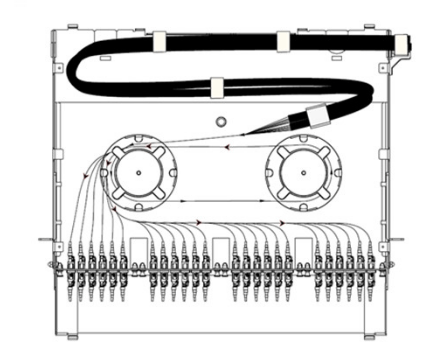
This kind of fiber enclosure usage is very common. Simply by installing two slack spools and four fiber patch panel on the fiber enclosure, it could make fiber patch cables management much easier. The following picture shows a breakout fiber patch cable installed in the fiber enclosure and being well organized by the spools.

2-2.png

Installing HD MTP Cassettes

Up to four MTP Cassettes can be installed in this 1U fiber enclosure, which can provide 40G/100G to 10G high cabling density and easy transferring from MTP interface to LC interface.

3.png

Conclusion

Choosing an affordable rack mount fiber enclosure that within your installation budget serves as a basic requirement, However, a premium rack mount fiber enclosure is a durable item that will provide services for years to come. Fiber-MART provide customized service to fit whatever application you require. For more information , pls not hesitate to contact me at service@fiber-mart.com

What’s the Difference Between Singlemode and Multimode Fiber Patch Cables?

by http://www.fiber-mart.com

When searching the Internet for network fiber patch cables, the first decision you often encounter is singlemode or multimode. Hopefully, I can make that decision easier for you by explaining the differences between the two, and why you should choose one over the other.
The Core of the Matter
First and foremost, the core of all fiber cables carries light to transmit data. The main difference between singlemode and multimode fiber patch cables is the size of their respective cores. Singlemode cables have a core of 8 to 10 microns. In singlemode cables, light travels toward the center of the core in a single wavelength. This focusing of light allows the signal to travel faster and over longer distances without a loss of signal quality than is possible with multimode cabling. Multimode cables have a core of either 50 or 62.5 microns. In multimode cables, the larger core gathers more light compared to singlemode, and this light reflects off the core and allows more signals to be transmitted. Although more cost-effective than singlemode, multimode cabling does not maintain signal quality over long distances.
The Best Choice for Your Application
Singlemode Fiber Patch Cables are the best choice for transmitting data over long distances. They are usually used for connections over large areas, such as college campuses and cable television networks. They have a higher bandwidth than multimode cables to deliver up to twice the throughput. Most singlemode cabling is color-coded yellow.
Multimode Fiber Patch Cables are a good choice for transmitting data and voice signals over shorter distances. They are typically used for data and audio/visual applications in local-area networks and connections within buildings. Multimode cables are generally color-coded orange or aqua; the Aqua Fiber Patch Cables are for higher performance 10Gbps, 40Gbps, and 100Gbps Ethernet and fiber channel applications.

How To Make Fiber Optic Patch Cables

by http://www.fiber-mart.com

Times are tough these days, which is why many people are looking to save a few dollars any way they can. A couple weeks ago we made a video showing you How To Build an Inexpensive Wall Mount Fiber Box. We’ve already had quite a few customers thank us for that cost saving solution. Today, let’s talk about making your own fiber optic patch cables.
Seems like just about everyone in the low voltage industry has made their own ethernet cat5e/cat6 cables at least once in their life (me included). And I’m sure you have too. So you’re thinking, those are really easy and only take a few minutes, why don’t I just start making my own fiber cables. Unfortunately, we’re not comparing apples to apples here. Making your own fiber cables CAN be an easy process, but it’s not very economical. I’m talking about the FAST fiber connectors from AFL Telecommunications. Although these connectors require only a couple minutes per strand to complete, they are much pricier than regular connectors and still require a couple expensive tools. It wouldn’t make sense to buy these unless you already had the tools and did fiber terminations regularly. Even then, the cost of the connectors make this an expensive way to make fiber jumpers. If this is still something your interested in, watch the video below.
The other option for making fiber cables would be epoxy fiber connectors. These connectors have been around for quite a while now and are fairly inexpensive. The problem with these connectors is the amount of time involved in terminating them. In addition, you still need all the tools and testing equipment to get the job done. Well, I thought you were going to show us how to make fiber jumpers? That’s where the “kinda” comes in. Watch the video below for a brief explanation on making fiber cables, but when it comes down to it, buying pre-made fiber cables is the way to go. You can order them in any length you need, with any type of fiber, and any type of connector. If you need more than 2 strands of fiber, or plan on using them for a long distance, I would recommend Pre-Terminated Fiber Optic Cable. Pre Terminated fiber assemblies are just like the fiber jumpers, but can be pulled long distances and are much more durable. To order any of the products talked about in this article, simply click the links above or visit fiber-mart.com.