Difference Between Media Converter and Network Switch

Media converter and network switch are both widely used in today’s high speed network applications. In some scenes, one can used to replace another one. Then, which one should I choose for my network? What is the difference between media converter and network switch? This post will cover the knowledge of media converter and network switch, and explain the difference between.

Media converter and network switch are both widely used in today’s high speed network applications. In some scenes, one can used to replace another one. Then, which one should I choose for my network? What is the difference between media converter and network switch? This post will cover the knowledge of media converter and network switch, and explain the difference between.

 What does Media Converter mean?

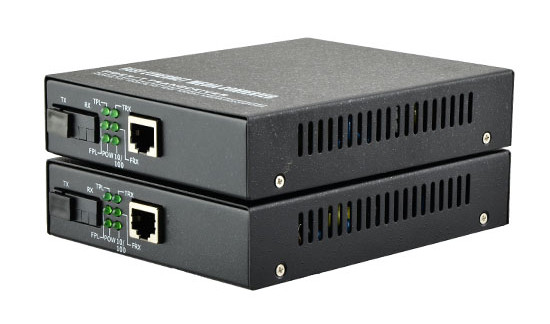
 A media converter, in the context of network hardware, is a cost-effective and flexible device intended to implement and optimize fiber links in every kind of network. Among media converters, the most often used type is a device that works as a transceiver, which converts the electrical signal utilized in copper unshielded twisted pair (UTP) network cabling to light waves used for fiber optic cabling. It is essential to have the fiber optic connectivity if the distance between two network devices is greater than the copper cabling’s transmission distance.The copper-to-fiber conversion carried out by a media converter allows two network devices having copper ports to be connected across long distances by means of fiber optic cabling.

Techopedia explains Media Converter

A media converter offers fiber-to-fiber conversion as well, from multi-mode fiber into single-mode fiber. It also converts a dual fiber link to single fiber with the help of bi-directional (BIDI) data flow. In addition, media converters have the capability to convert between wavelengths for applications that use wavelength division multiplexing (WDM).

Generally, media converters are protocol specific and they support an extensive array of data rates and network types. They are presented as physical layer or Layer 2 switching systems. Media converters that include Layer 2 switching functionality offer rate-switching as well as other innovative features.

Network intricacy, challenging applications and the increasing range of network devices drive network bandwidth and speed requirements to new extents and push longer distance requirements inside the local area network (LAN). The answer to these issues is media converters.Media converters permit fiber usage when required and integrate new devices into existing cabling infrastructure. Media converters provide flawless incorporation of fiber and copper, and various fiber forms in LAN networks. They support a multitude of protocols, media types and data rates to build a more trustworthy and cost-effective network.

Media converter characteristics:

·Expands network distances with the conversion of UTP to fiber and the extension of fiber links

·Retains investments in pre-existing devices

·Boosts the potential of present fiber with WDM wavelengths

New applications for media converters:

·Remotely handled converters and multi-port switch configurations

·Conversion of DM wavelengths to enhance the bandwidth capacity

·Facilitate fiber-to-the-desktop

What is Network Switch?

A network switch is a computer networking device that connects devices together on a computer network by using packet switching to receive, process, and forward data to the destination device. Usually, a switch serves as a controller, enabling networked devices to talk to each other efficiently. Through information sharing and resource allocation, switches save businesses money and increase employee productivity. And the network switch operates at the data link layer (Layer 2) of the Open Systems Interconnection (OSI) model called layer 2 switch, which operates at the network layer (layer 3) of the OSI model called layer 3 switch.

The relationship between switches, media converters, and OSI layers

Today’s media converters are often switches, and switches often act as media converters. Plus, both switches and media converters are frequently described in terms of layers—Layer 2, Layer 3. How can you tell what the heck you’re looking at?

Most of the confusion happens around OSI Layer 2 where Layer 1 media converters have evolved to meet basic switches. And today’s switches are rapidly advancing into Layer 3 and 4, territory formerly held by routers, muddying the waters still more.

A clear understanding of what OSI layers do, and what the differences between devices operating at different layers are, will help you select the right device.

OSI is a layered network design framework. The layers are referenced in the Open Systems Interconnection (OSI) Reference Model (which provides a layered network design framework that establishes a standard so that devices from different vendors work together). The OSI model is hierarchical. The layer at which a switch or a media converter operates determines which addressing detail it reads as data passes through.

Layer 1: media converters

Layer 1 is the Physical Layer. Media converters operating at Layer 1 only convert electrical signals and physical media without doing anything to data coming through the link.

These media converters only have two ports—one in, one out—and convert the incoming electrical signal from one cable type and then transmit it over another type—UTP to fiber, thick coax to Thin, and so on.

Layer 2: switches and media converters

Layer 2 is the Data-Link Layer. Devices operating at Layer 2 sort packets using physical network addresses, also known as MAC addresses. All network hardware is permanently assigned this number during its manufacture.

Both switches and media converters can be Layer 2 devices. Usually the only difference between a Layer 2 switch and a Layer 2 media converter is the number of ports—a device with two or three ports is called a media converter; four or more ports is called a switch. A media converter operating at Layer 2 may have more than two ports and may have ports operating at different speeds.

Devices operating at Layer 2 are very fast, but aren’t very smart because they don’t look at data packets closely. A Layer 2 media converter is considered to be fairly advanced for a media converter, but a Layer 2 switch is a basic switch. You follow?

Layer 3: switches

Layer 3 is the Network Layer. Layer 3 switches use network or IP addresses that identify locations on the network. Because they read packets more closely than Layer 2 switches do, they identify network locations as well as physical devices. A location can be a LAN workstation, an address in a computer’s memory, or even a different packet of data traveling through a network.

Switches operating at Layer 3 are smarter than Layer 2 devices and incorporate routing functions to actively calculate the best way to send a packet to its destination.

Layer 4: switches

Layer 4—the Transport Layer of the OSI model—coordinates communications between systems. Layer 4 switches are capable of identifying which application protocols (HTTP, SNTP, FTP, and so forth) are included with each packet, and use this information to hand off the packet to the appropriate higher-layer software.

Because Layer 4 devices enable you to establish priorities for network traffic based on application, you can assign a high priority to packets belonging to your vital in-house applications, with different forwarding rules for low-priority packets.

Layer 4 switches also provide an effective wire-speed security shield for a network because any company- or industry-specific protocols can be confined to only authorized switched ports or users. This security feature is often reinforced with traffic filtering and forwarding features.

High-end vs. low-end switches

Switches can also be considered low end or high end. A low-end switch operates in Layer 2 of the OSI model and can also operate in a combination of Layers 2 and 3. High-end switches operate in Layer 3, Layer 4, or a combination of the two.

Conclusion

Media converters can be used anywhere in the network to integrate newer technology with existing equipment to support new applications, technologies and future growth. Layer 2 and layer 3 network switches are also widely deployed in enterprise and data center for higher speed and more capacity. Fiber-Mart provides both media converters and managed network switches for your option. You can choose the most suitable one according to your specific needs:product@fiber-mart.com
Cut Out Costly Mistakes With Fiber Optic Cleaver

To get good fiber optic splices or terminations, especially when using the pre-polished connectors with internal splices, it is extremely important to cleave the fiber properly. Imprecisely cleaving of the fiber ends, therefore, will result in improper matching. So, the end of the fiber must be cleaved to a 90 degree flat end when it is prepared for a connector or splice. However, technicians often encountered the problem that the end of the fiber strand is so small, making it is impossible to tell whether the strand has a flat end. To ensure smooth and precise fiber cleaving, a fiber optic cleaver is much needed. And in this article, we will offer you some useful information about fiber optic cleaver.

To get good fiber optic splices or terminations, especially when using the pre-polished connectors with internal splices, it is extremely important to cleave the fiber properly. Imprecisely cleaving of the fiber ends, therefore, will result in improper matching. So, the end of the fiber must be cleaved to a 90 degree flat end when it is prepared for a connector or splice. However, technicians often encountered the problem that the end of the fiber strand is so small, making it is impossible to tell whether the strand has a flat end. To ensure smooth and precise fiber cleaving, a fiber optic cleaver is much needed. And in this article, we will offer you some useful information about fiber optic cleaver.

What is Cleaving or Fiber Cleaver?

Cleaving is the process by which an optical fiber is “cut” or precisely broken for termination or splicing. Just like cutting glass plate, fiber is cut by scoring or scratching the surface and applying stress so the glass breaks in a smooth manner along the stress lines created by the scratch. Properly done, the fiber will cleave with a clean surface perpendicular to the length of the fiber, with no protruding glass on either end.

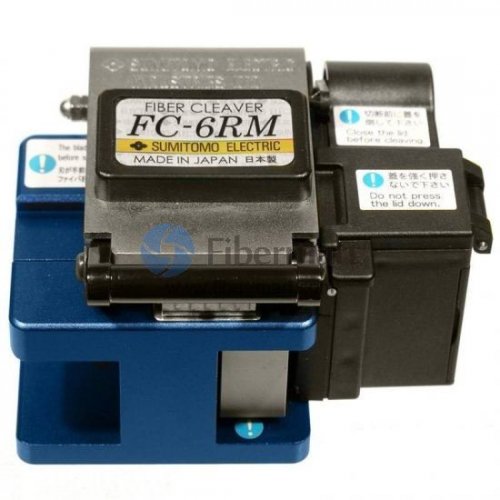
A fiber cleaver is a tool that holds the fiber under low tension, scores the surface at the proper location, then applies greater tension until the fiber breaks. Good cleavers are automatic and produce consistent results, irrespective of the operator. With good fiber cleavers, you only need to clamp the fiber into the cleaver and operate its controls, then fiberglass is cleaved automatically. However, some cleavers are less automated and require operators to exert force manually to cut the fiber cable, which makes it difficult to predict and control the force. The good cleavers are called as precision cleavers, while the less automated ones are called as cheap or scribe cleavers, which will be introduced in the next part.

Two Types of Fiber Optic Cleavers

We know that the closer to 90 degrees the cleave is, the greater chance you will have to match it with another cleaved fiber, then be spliced or mated by a connector. Thus, a proper tool with good technique is demanded for consistently achieving a 90 degree flat end. Good cleavers are automatic and can produce consistent results, irrespective of the operator. The user only needs to clamp the fiber into the cleaver and operate its controls. Some cleavers are less automated, making them more dependent on operator technique and therefore less predictable. There are basically two broad categories of fiber optic cleavers: scribe cleavers and precision cleavers.

Scribe Cleavers

This type is based on a traditional cleaving method. It is typically used to remove excess fiber from the end of a connector before polishing, simply by using a hand tool called scribe. Scribe cleavers are usually shaped like ballpoint pens with diamond tipped wedges or come in the form of tile squares. The scribe has a hard, sharp tip, generally carbide or diamond, which is used to scratch the fiber manually. Then the operator pulls the fiber to break it. Since both the scribing and breaking process are under manual control, this method varies greatly in repeatability. Most field and lab technicians shy away from these cleavers as they are not accurate. However, if used in skilled hands, this scribe cleaver reduces the cost significantly for repairs, installation, and training classes.

Precision Cleavers

Precision cleavers are the most commonly used cleavers in the industry. They use a diamond or tungsten wheel/blade to provide the nick in the fiber. Tension is then applied to the fiber to create the cleaved end face. The advantage of these cleavers is that they can produce repeatable results through thousands of cleaves by simply rotating the wheel/blade accordingly. Although more costly than scribe cleavers, precision cleavers can cut multiple fibers at one time with increased speed, efficiency, and accuracy. While in the past, scribe cleavers were widely used for fiber cleaving, precision cleavers are now developed to support various applications and multiple fiber cleaving. Precision cleavers contribute to better cleave, which ensures low splice loss and precision cleavers, besides, its blades have a much longer life span.

Operation method

1.Verify that the device has the blade sliding plate in front of one end, open the size platen;

2.Stripped fiber coating stripping fiber clamp reserve bare fiber length of 30-40mm, to wrap fiber, cotton wool or tissue dipped in alcohol then clean fiber. Rub with cotton wool or tissue paper, do not use the same cotton wool or tissue paper to rub the second (Note: Please use plain Greater than 99% alcohol).

3.Visual edge alignment of the fiber coating cutter ruler (12-20cm) appropriate scale, the left hand placed in the optical fiber oriented pressure tank the bare fiber placed straight on the left and right rubber mat.

4.Together on a small plate, large platen to promote devices blade slider the blade dicing fiber under surface, and is free to slide to the other side, cut fiber;

5.The left hand held onto the cutter, the right hand to open a large pressure plate and remove fiber debris into fixed container.

6.Pinch the optical fiber with the left hand while the right hand to open the small pressure plate, carefully remove the fiber cut end face, attention: the neat fiber cross-section do not touch it matter.

The advantages of fiber optic cleaver

1.Excellent beam quality of a smaller of focal diameter and high working efficiency, high quality;

2.High cutting speed: cutting speed greater than 10m/min;

3.Stable operation: the world’s top import fiber optic lasers, stable performance, key parts can reach 100,000 hours;

4.The high efficiency of photoelectric conversion: Compare with CO2 laser cutting machine, fiber optic laser cutting machine have three times photoelectric conversion efficiency;

5.Low cost: to save energy and protect the environment Photoelectric conversion rate as high as 25-30%. The low power consumption, which is the traditional CO2 laser cutting machine is only about 20% -30%;

6.Low maintenance costs: fiber line transmission, no need reflect lens, save maintenance costs;

7.Simple operation: optical fiber transmission lines, there is no adjustment of the optical path;

8.Super flexible optical effects: compact design, compact and easy to flexible manufacturing requirements.

Tips on Choosing Fiber Cleavers

1. Select fiber cleavers according to your application requirements. Fiber cleavers, designed for fusion splicing, need a low average angle that is one degree or less, whereas cleavers appropriate for mechanical connectors require angles below three degrees. So determine whether you require a single-fiber or multi-fiber cleaver before you cleave the fibers at one time.

2.Think twice before purchasing a cleaver built into a splicer. If you intend to purchase the built-in cleavers, you must check whether the cleaver or splicer requires maintenance. It may cause inconvenience to technician if they loses valuable tools, which can hold up the job at hand.

3.Purchase a cleaver with the latest automation features that can save a lot of labour and time. Fiber cleavers are always continuing to evolve with new and improved features, such as automated fiber scrap collection, automated scoring mechanisms, and the latest automatic blade rotation technology.

Conclusion

Precise cleaving is the premise of successful fusion splicing. Thus the quality of the fiber cleavers directly determines the quality of fiber optic splices or terminations. If the fiber ends were not cleaved perfectly, fiber loss would occur which would in turn affect the transmission of signals. To buy reliable and high precision fiber cleavers, please visit Fiber-Mart or contact us via product@fiber-mart.com.

HOW TO USE & MAINTAINE THE FUSION SPLICING MORE EFFICIENTLY?

What is Fusion Splicer?
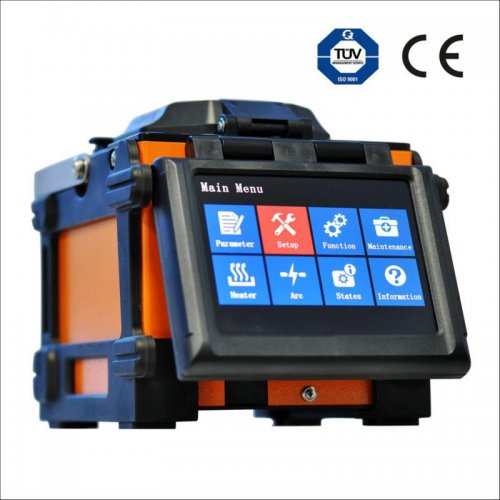
Fusion splicer may be the act of joining two optical fibers end-to-end using heat. The thing is to fuse both the fibers together in such a way that light passing with the fibers is not scattered or reflected back from the splice, and thus the splice as well as the region surrounding it are almost as strong because virgin fiber itself. The basic fusion splicer apparatus includes two fixtures which the fibers are mounted and two electrodes. Inspection microscope assists in the placement in the prepared fiber ends into a fusion-splicing apparatus.The fibers they fit in to the apparatus, aligned, and then fused together.

What is Fusion Splicer?

Fusion splicer may be the act of joining two optical fibers end-to-end using heat. The thing is to fuse both the fibers together in such a way that light passing with the fibers is not scattered or reflected back from the splice, and thus the splice as well as the region surrounding it are almost as strong because virgin fiber itself. The basic fusion splicer apparatus includes two fixtures which the fibers are mounted and two electrodes. Inspection microscope assists in the placement in the prepared fiber ends into a fusion-splicing apparatus.The fibers they fit in to the apparatus, aligned, and then fused together.

Initially, fusion splicing used nichrome wire as the heating unit to melt or fuse fibers together. New fusion-splicing techniques have replaced the nichrome wire with fractional co2 lasers, electric arcs, or gas flames to heat the fiber ends, causing them to fuse together. The little size of the fusion splice along with the development of automated fusion-splicing machines make electric arc fusion the most popular splicing approaches to commercial applications.

Fusion splicers are automatic machines that you need to either choose factory recommended settings or you set the splicing parameters yourself.  There are five basic steps to fusion splicing with a splicing machine.

1.Put on the fusion splice protection sleeve.

2.Strip the fiber. Strip back all fiber coatings down to the 125um bare fiber. Clean the bare fiber with 99% isopropyl alcohol.

3.Cleave the fiber. The fiber needs to be cleaved with a high precision cleaver. Most splicing machines come with a recommended cleaver. Fiber cleaving is a very important step as the quality of the splice will depend on the quality of the cleave.

4.Put the fibers into the fiber holders in the fusion splicer. Press the start button to start the fusion splicing

5.Heat shrink the protection sleeve to protect the splicing joint.

The most common parts of a fiber fusion splicer include Electrodes and V-Grooves. Fusion splicers are dependent upon high-quality electrodes to focus that critical arc of electricity. As the electrodes wear from use, electrodes gradually worn and lead to weaker splices and higher splice losses. Cleaning electrode is part of the essential maintenance of fusion splicer and will not restore the performance of the fusion splicer as electrodes need to be replaced.

Always replace fusion splicer electrodes as a pair. For optimal performance, electrodes should also be aligned when they are replaced. This is a tuning process to maximize the performance of your splicer.

Maintained Methods of Fusion Splicer Parts

1. Electrical welding electrode life is generally about 2000, after a long time the electrode will be oxidized, resulting in the discharge current is too large leaving the splice loss value increases. You can remove the electrodes, medical cotton wool dipped in alcohol to gently wipe and then install the fusion splicer, and discharge cleaned once. If repeated washing, the discharge current is still too large, it shall replace the electrode.

Replace the electrode first remove the protection of the electrode chamber cover, loosen the screws fixed on the electrode and remove the upper electrode. Then release the top wire fixed to the lower electrode, remove the lower electrode. Installation of new electrode opposite action of the demolition order, require two electrode tip clearance: 2.6 ± 0.2mm, with the optical fiber symmetry. Under normal circumstances electrode is not required to be adjusted. Not touch the tip of the electrode in the replacement process, prevent damage, and should avoid the electrodes to fall inside the machine. After replacing the electrode, carry out calibration of the arc position.

Fiber Optic Fusion Spare Electrodes

Care of the electrode used for a long time, the tip of the electrode will produce sediment discharge poor, then there will be a “hissing” sound, then need to clean the electrode. The recommended the regular welding machine electrodes care that clean the electrode.

2. 4 clean V-shaped groove welding machine tune the core direction of the upper and lower driving range each only tens of microns, slightly foreign body will make the fiber image deviation from the normal position, resulting in normal alignment. At this time the need for timely clean the V-groove:

A. Off the windshield of the welding machine.

B. Open the fiber optic pressure head and the clamping platen.

C.Stick with a cotton swab dipped in anhydrous alcohol (or sharpened toothpick) single wipe in a V-Groove Fiber Aligner.

Note: Avoid using hard objects to clean the V-groove or V-groove on the force, to avoid bad V-groove or V-groove inaccurate, resulting in the instrument can’t properly use.

Proper use of Fusion Splicer is to reduce an important guarantee of the optical fiber splice loss and key links. You always should be strictly in accordance with the instructions of the welding machine and operational procedures. And properly set the welding parameters according to the type of fiber (including pre-discharge current, time and the main discharge current, the main discharge time). Do as above, the working life of your fusion splicer certain can be longer.

Conclusion

Despite the advances in fiber and fusion splicing technology, there are still many aspects of splicing of which practitioners must remain aware. Differences in fibers, equipment, environment and technique can yield different splice loss results. It is important to learn how to use and maintain the fusion machine more efficiently.

Here are some guidelines for splicing contractors and technicians.

Follow the applicable equipment manufacturer’s guidelines for setup and maintenance of all splice equipment. All fusion splicer have maintenance requirements which should be described in the operating manual. Besides cleaning regularly, they require electrode alignment and occasional replacement. Follow manufacturer’s requirements for servicing.

Maintain clean equipment and a clean splice environment, being especially wary of windy and/or dusty conditions.

Use the fusion splicer’s estimated splice loss reading as an initial go/no-go evaulation of the splice.

Splice loss specifications should be set with the total link power budget in mind and be based on average splice loss.

For newest quotes of Fusion Splicers, For more info, please browse our website – www.Fiber-Mart.com or by sending an email to product@fiber-mart.com.

INTRODUCTION OF ODC CONNECTOR

What is ODC Connector?
ODC connectors are designed for the fiber to antenna (FTTA) applications. The ODC product range incorporates precision-machined rugged brass housings with two or four optical terminations in both singlemode and multimode fibers. The environmentally sealed, fixed and free connectors are supported by a range of highly crush resistant, high tensile strength “tactical” style cables.ODC fiber optic connector can with stand harsh environmental conditions when being used in outdoor applications. They are used for data and telecommunications in mobile radio, process, utility and traffic automation.

What is ODC Connector?

ODC connectors are designed for the fiber to antenna (FTTA) applications. The ODC product range incorporates precision-machined rugged brass housings with two or four optical terminations in both singlemode and multimode fibers. The environmentally sealed, fixed and free connectors are supported by a range of highly crush resistant, high tensile strength “tactical” style cables.ODC fiber optic connector can with stand harsh environmental conditions when being used in outdoor applications. They are used for data and telecommunications in mobile radio, process, utility and traffic automation.

ODC Fiber Optic Cable System

The ODC connectors, together with the support optical cable, are becoming the standard interface specified in 3G, 4G and WiMax Base Station remote radios and Fiber-to-the-Antenna applications.ODC fiber optic patch cables with extremely robust outdoor connector are designed to withstand harsh environment such as mechanical loads, high thermal exposure, and demanding environments like rain, salt and splash water. It is known for their ease of installation and highest operation safety due to the robust and ruggedized design. ODC military grade cables are installation-friendly for fixed or mobile applications and transmit reliably data over long distances under severe environmental conditions.

The ODC cable assembly is based on the N Type RF Coax connector. The product, however, is not limited to the above applications. It is also in the oil, wind power, rail transport and heavy machinery of digital information transmission and other areas play a strong role.The ODC cable assemblies have passed tests like salt mist, vibration and shock and meet protection class IP67. They are well suited for industrial and Aero-space and Defense applications.

Sum

We believe there is no country in the world in which ODC assemblieshave not been installed yet. There is no other RRH interface which is used more often and which was chosen by more system vendors. The success comes from the fact that ODC is an extremely robust outdoor connector which withstands all installation hazards – and most importantly – does not permit handling errors. ODC makes mobile networks more reliable and guarantees 100 % performance.

Fiber-Mart provides all types of outdoor fiber connectors. These connectors meet the highest quality and robustness standards, and they offer reliability and flexibility for outdoor applications.For purchasing more high quality fiber optical connectors with low cost or for more products’ information, please contact us: product@fiber-mart.com

Basic Knowledge of Fiber Connector

Remateable connections are made possible by Fiber Connectors.  Fiber Connectors are therefore generally used where flexibility is needed at termination points when an optical signal is routed. Examples would include connections from receivers to equipment pigtails, or normal termination, or when re-configuring systems. Remateable connections make it easy to meet changing customer requirements by simplifying system reconfigurations.

Remateable connections are made possible by Fiber Connectors.  Fiber Connectors are therefore generally used where flexibility is needed at termination points when an optical signal is routed. Examples would include connections from receivers to equipment pigtails, or normal termination, or when re-configuring systems. Remateable connections make it easy to meet changing customer requirements by simplifying system reconfigurations.

Application

Optical fiber connectors are used to join optical fibers where a connect/disconnect capability is required. Due to the polishing and tuning procedures that may be incorporated into optical connector manufacturing, connectors are often assembled onto optical fiber in a supplier’s manufacturing facility. However, the assembly and polishing operations involved can be performed in the field, for example, to terminate long runs at a patch panel.

Optical fiber connectors are used in telephone exchanges, for customer premises wiring, and in outside plant applications to connect equipment and cables, or to cross-connect cables.

QQ图片20180725164500

Most optical fiber connectors are spring-loaded, so the fiber faces are pressed together when the connectors are mated. The resulting glass-to-glass or plastic-to-plastic contact eliminates signal losses that would be caused by an air gap between the joined fibers.

Performance of optical fiber connectors can be quantified by insertion loss and return loss. Measurements of these parameters are now defined in IEC standard 61753-1. The standard gives five grades for insertion loss from A (best) to D (worst), and M for multimode. The other parameter is return loss, with grades from 1 (best) to 5 (worst).

A variety of optical fiber connectors are available, but SC and LC connectors are the most common types of connectors on the market. Typical connectors are rated for 500–1,000 mating cycles.The main differences among types of connectors are dimensions and methods of mechanical coupling. Generally, organizations will standardize on one kind of connector, depending on what equipment they commonly use.

In many data center applications, small (e.g., LC) and multi-fiber (e.g., MTP/MPO) connectors have replaced larger, older styles (e.g., SC), allowing more fiber ports per unit of rack space and higher data rate application such as 100 Gigabit Ethernet.

Features of good connector design:

  • Low insertion loss
  • High return loss (low amounts of reflection at the interface)
  • Ease of installation
  • Low cost
  • Reliability
  • Low environmental sensitivity
  • Ease of use

Outside plant applications may require connectors be located underground, or on outdoor walls or utility poles. In such settings, protective enclosures are often used, and fall into two broad categories: hermetic (sealed) and free-breathing. Hermetic cases prevent entry of moisture and air but, lacking ventilation, can become hot if exposed to sunlight or other sources of heat. Free-breathing enclosures, on the other hand, allow ventilation, but can also admit moisture, insects and airborne contaminants. Selection of the correct housing depends on the cable and connector type, the location, and environmental factors. Careful assembly is required to ensure good protection against the elements.

Depending on user requirements, housings for outside plant applications may be tested by the manufacturer under various environmental simulations, which could include physical shock and vibration, water spray, water immersion, dust, etc. to ensure the integrity of optical fiber connections and housing seals.

what’s the difference of Fiber Connectors?

Given the variety of splice options available to fiber network planners today identifying the best connector for FTTH can be overwhelming. Consequently often not much thought is given to connector selection with choice driven by cost, availability or what’s been used before. However each connector has its own unique design and therefore, pros and cons. Over time or depending on project size this can have a dramatic impact on deployment speeds and costs.

99

So what are the differences and what do they mean to your implementation? This table of common connectors gives an overview of strengths and weaknesses, with more detail in the accompanying descriptions:

1.Standard Connector (SC)

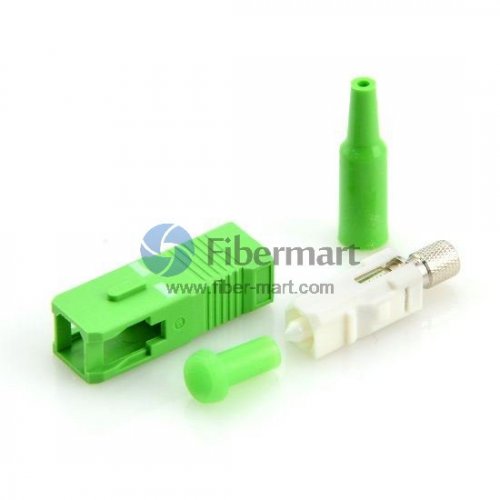
Simple, rugged and low cost, SC connectors use a ceramic ferrule to deliver accurate alignment of the SMF. The SC connector comes with a locking tab that enables push on / pull off operation.

At the time of writing the most popular choice for such equipment like Fiber Multiplexers, GPON and EPON ONU’s, Fiber Media Converters and more.

sc
Figure 3: SC connector

2.Ferrule Core Connector (FC)

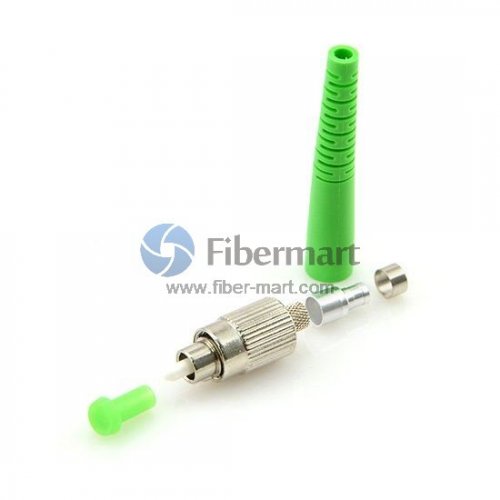
Although the FC connector was widely used in fiber optic networks until of late, its use is dwindling fast. This connector uses a threaded container and a position locatable notch to achieve exact locating of the SMF in relation to the receiver and the optical source. Once the connector is installed, its position is maintained with total precision.

FC connector is pretty common choice for example in Video over Fiber Transmission Equipment.

fc

Figure 4:  FC connector

3.Lucent Connector (LC)

The Lucent Connector, sometimes referred to as the Little Connector, is a small form factor FOC that uses a 1.25 mm ferrule. There are 3 different types of LC connectors:

  • Single Mode LC APC
  • Single Mode LC UPC
  • Multi-Mode LC UPC

If you had used any SFP module, you have sure seen this connector.

LC

Figure 5:  LC connector

LC connector is always present on SFP’s, and if some equipment uses SFP as transmitter, like for example our USB over fiber transmitters, then you can recognize it easily.

4. ST Connector


The ST connector’s keyed bayonet design is similar to that of a BNC (Bayonet Nut Connector or Bayonet Neill-Concelman) connector. The connector is used widely for MMF and SMF FOC and is extremely easy to use. The ST connector is manufactured in two versions – the ST and the ST-II. Both types are keyed and spring loaded, and use a “push-in and twist” mechanism.

ST

Figure 6:  ST connector

In some cases, if Multimode type cable is required, some of our customers order RCA audio over fiber converter, with ST connectors:

5. MTP/MPO connector


The MT ferrule connector is another of NTT’s inventions and has been around since the 1980s, although the technology has only recently become popular under branded versions of the Multiple Fiber Push-On/Pull-Off connector, such as MTP and MPO. It is larger than the other connectors but for good reason – it can support up to 24 fibers in a single ferrule.

Multi-fiber connectors are not currently designed for field-fit applications so must be lab terminated. In high density patch environments such as datacenters they are used extensively, both at single mode and multi-mode wavelengths. On a ‘per-fiber’ basis the costs are relatively inexpensive. However as might be expected, the attenuation loss can be higher than a single ceramic ferrule connector. That being said, it is possible to order ‘low loss’ MTP/MPO connectors which have comparable insertion loss performances. These are more costly however.

Network planners should also consider that whilst still using a uniter/adaptor much like other connectors, the MTP/MPO must also be mated to an opposing male or female connector. This may require more than one connector specification or type within inventory, adding to cost and complexity.

Because the sequence of the fibers cannot physically be changed after termination, the connector is often supplied with a fan-out assembly at the opposing end (such as LC, SC FC etc.). This allows the operator to change channels simply by re-patching the fanned-out side of the cable. The consequence of this is that the small form high density design of the MTP/MPO will only benefit one side of the assembly.

Fiber-Mart can supply many kinds fiber connectors. If you have any questions or requirement of fiber connectors,welcome to contact us: product@fiber-mart.com.

Introduction of Loopback Cable  

When testing the transmission equipment, fiber optic loopback device is often used as the testing tool. It is known as the routing of electronic signals, digital data streams, or flows of items back to their source without intentional processing or modification. Fiber optic loopback is widely used for various applications. In terms of telecommunication, loopback is a hardware or software method to feed a received signal or data back to the sender. It is very useful for solving physical connection problems.This post will be a guide on how to choose a right loopback cable for specific transceiver module.

What is Loopback Cable?

When testing the transmission equipment, fiber optic loopback device is often used as the testing tool. It is known as the routing of electronic signals, digital data streams, or flows of items back to their source without intentional processing or modification. Fiber optic loopback is widely used for various applications. In terms of telecommunication, loopback is a hardware or software method to feed a received signal or data back to the sender. It is very useful for solving physical connection problems.This post will be a guide on how to choose a right loopback cable for specific transceiver module.

111

Types of Fiber Optic Loopback

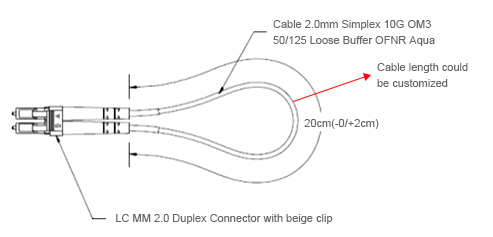
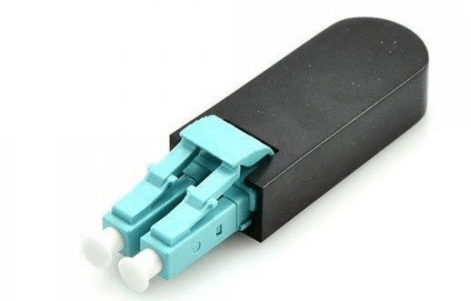
So, what is exactly the fiber optic loopback? Before deciding which loopback cable to use, we should firstly know the structure and classification of fiber loopback cable.By diagnosing the problems of optical equipment, fiber optic loopback provides an easy way to test the performance of the optical network devices. Generally, fiber optic loopback cable and fiber optic loopback module are both fiber optic loopbacks. Fiber optic loopback cable is the traditional fiber optic loopback with a visible cable. It is equipped with two fiber optic connectors on each end of the cable. When sticking the connectors together, the cable will shape like a loop. As for fiber optic loopback module, the biggest difference is that it has a enclosure to protect the inside cable. And the looped space is reduced for an easier usage and economic package.According to the optical connector type of the loopback, fiber loopback cables can be divided to LC, SC, FC, ST, MTP/MPO, E2000, etc. In testing fiber optic transceiver modules, the most commonly used are LC, SC and MTP/MPO loopback cables.

99

Figure 1: LC & SC Loopback Cable

The LC and SC loopbacks are made with simplex fiber cable and common connectors; it’s not difficult to understand their configurations. As for the MTP/MPO loopback, it is mainly used for testing parallel optics, such as 40G and 100G transceivers. Its configuration varies since the fiber count is not always the same in different applications.

8 Fibers MTP/MPO Loopback Cable Configuration

In a 8 fibers MTP/MPO loopback, eight fibers are aligned on two sides of the connector, leaving the central four channels empty. And the fibers adopt a straight configuration of 1-12, 2-11, 5-8, 6-7. The polarity channel alignment is illustrated in the following figure.

88

Figure 2: 8 Fibers Loopback Polarity Channel Alignment

12 Fibers MTP/MPO Loopback Cable Configuration

The only difference between the 12-fiber MTP loopback and the 8-fiber loopback is that the central four channels are not empty. Its alignment is 1-12, 2-11, 3-10, 4-9, 5-8, 6-7.

77

Figure 3: 12 Fibers Loopback Polarity Channel Alignment

24 Fibers MTP/MPO Loopback Cable Configuration

The 24 fibers MTP loopback also adopts type 1 polarity. Its alignment design is shown below.

66

Figure 4: 24 Fibers Loopback Polarity Channel Alignment

How to Use Loopback Cable?

The loopback cables are often used in conjunction with testing software to “loop” traffic right back into the port. If the data sent out into the loopback plug is identical to the data received from the loopback plug, you can assume that the basic communication functions of the port are working properly. So the common application of loopback cable is Loopback Test.

554

Loopback Test

Fiber loopback cable is often utilized to check whether the transceiver module is working perfectly as designed. As we all know, transceiver module has two ports, a transmitter port and a receiver port. The former one is to send out laser signals and the latter is to receive signals. When performing the loopback test, the fiber loopback cable can be directly plugged into the output and input port of transceiver module respectively (the ports at the ends of the connection must be compatible). Thus, during the testing process, the loopback cable directly routes the laser signal from the transmitter port back to the receiver port. Then we can compare the transmitted pattern with the received pattern to troubleshoot a defective node in the network. Fiber optic loopback testing is the easiest way to ensure that the transceiver works faultlessly. When selecting a suitable fiber loopback for the transceiver, we should consider the connector type, polish type, and cable type.

Application

When it comes to practical application, fiber optic loopback test is often employed for checking fiber optic transceivers. Since transceiver has two ports for receiving and transmitting the light signal, it is necessary to test the ports to see whether they are still under operation. Thus, fiber optic loopback test is the most convenient way for transceiver maintenance. The testing process is by routing the laser signal from the transmitter port back to the receiver port. Then the transmitted pattern is compared with the received pattern to make sure they are identical and have no error.

Conclusion

All in all, loopback cables play an important role in troubleshooting in laboratories and manufacturing environments. They facilitate the testing of simple networking issues and are available at very low costs.Similar to other cables, it also has multiple classifications of fiber types, connector types for different needs. The deployment of fiber optic loopback components has greatly saved the trouble for device checking. There is no doubt that using fiber optic loopback is an effective method in fiber optic communication. There are many loopback cable manufactures on the market, providing single mode and multimode fiber optic loopback plugs available with FC, LC, MT-RJ, SC connectors. Fiber-Mart is one of the fiber loopback cable providers, all loopback cables are precision terminated and feature extremely low loss characteristics for transparent operation in the test environment.I believe you can find a suitable products for your devices in Fiber-Mart. please contact us: product@fiber-mart.com.